What We Wish We Learned in Health Class
Let’s be honest.
Health class — for many of us — was barely a class. It was more like an afterthought: a badly edited slideshow, a couple of ancient diagrams that didn’t look remotely like actual anatomy, and a teacher who either avoided eye contact or blushed like they were being held hostage. We got a free pad (once) and some vague warnings about sex that sounded more like horror stories than actual education.
We spent more time learning to label parts of a frog than we did learning what was happening inside our own bodies. We memorised how lungs work and how a kidney filters waste, but no one taught us how to recognise real period pain. Or what discharge actually is. Or why your hormones might feel like they’re playing a cruel joke on you.
And because we didn’t learn those things, we learned shame instead.
We learned to whisper questions. To panic-search things online in the dark. To assume everyone else had it figured out. And when something felt weird or wrong, we didn’t know how to ask for help — or if we even deserved to.
That’s why Aletheia exists.
To fill in the gaps. To rewrite the script. To offer the health class we should’ve had — warm, funny, inclusive, and true.
So, here it is: What We Wish We Learned in Health Class.
Not just the biology, but the real-life stuff. The stuff that makes us say, “Oh. Why didn’t anyone tell me that?”
1. Your body is not inappropriate.
We wish someone had started with this.
Before they even said the word “ovaries.” Before the diagrams. Before the condoms on bananas. Just this:
Your body is not inappropriate.
Not too loud. Not too gross. Not too complicated. Not too much.
You are not being disrespectful by wanting to understand what’s happening inside you. You are not being dramatic if something hurts. You are not “too sensitive” if being dismissed by a doctor made you cry.
Because for so many of us, our first introduction to health wasn’t science. It was shame.
We learned early on that crossing our legs and lowering our voices was the “proper” way to carry ourselves. That asking questions about our bodies was attention-seeking. That wanting to understand periods, sex, or pain somehow made us inappropriate. We weren’t taught curiosity. We were taught control.
And when our bodies started changing in ways we didn’t expect — swelling, stretching, bleeding, aching — we didn’t know how to respond. We thought the discomfort was a sign of weakness. That needing support made us difficult. That wanting information made us too much.
But let us be clear:
You are not too much. You are just a person with a body that deserves to be known.
Understanding your health is not a rebellion. It is a right. There is no part of you — not one drop of discharge, not one spike of hormone, not one stretch mark, not one period clot — that should be treated as taboo. Your body is not inappropriate. The silence around it is.
And the sooner we drop that shame, the sooner we can start asking the questions that matter — and expecting answers that are worthy of us.
2. The menstrual cycle is more than just “you bleed sometimes.”
We were taught: You bleed. Use a pad. Don’t wear white. Try not to die.
But here’s what we weren’t taught:
Your period is part of a complex, cyclical process involving fluctuating hormones, internal shifts, and changes in your body and mind. It’s called the menstrual cycle, and it has four distinct phases:
-
Menstrual Phase (Day 1-5): Your uterus sheds its lining. You bleed. Energy may be low. Cramps may hit. You’re not lazy — you’re doing internal renovation.
-
Follicular Phase (Day 6-13): Oestrogen rises. Mood lifts. Creativity flows. This is your body’s prep zone.
-
Ovulation (Day 14-ish): An egg is released. Some people feel a sharp one-sided cramp (mittelschmerz). Your libido might spike. Discharge becomes stretchy and clear. You’re fertile now, whether you’re planning to be or not.
-
Luteal Phase (Day 15-28): Progesterone rises. PMS might hit. You may feel irritable, bloated, or tearful. Your body is preparing for either pregnancy or the next cycle.
Your cycle affects your mood, sleep, energy, appetite, skin, and focus. Knowing your own pattern helps you work with your body instead of feeling like it’s sabotaging you.
3. Discharge Is Normal (And No, You’re Not Dying)
This one deserves not just a TED Talk — it deserves a Netflix special, a national curriculum, and honestly? A public holiday.
Because the number of people who’ve quietly panicked over a stain in their underwear is astronomical. We’ve all had that moment — usually in early high school, usually in the bathroom, usually involving some dramatic internal monologue like:
“Oh my god. Am I leaking? Am I ill? Is something rotting? Am I… melting?!”
Spoiler: you were fine. What you saw was discharge.
And what no one tells you soon enough is that discharge is normal. Actually, it’s more than normal — it’s healthy. It’s your vagina’s way of saying, “Hey babe, just doing my daily clean-up. Carry on.”
Let’s break it down. Discharge is a fluid produced by glands inside your cervix and vagina that helps:
-
Clean out old cells
-
Maintain a healthy pH
-
Protect you from infection
-
Keep things lubricated when needed
Think of it like your vagina’s personal skincare routine — no influencer code required.
So… what’s it supposed to look like?
Discharge changes all the time depending on where you are in your cycle. Seriously. It has moods. It’s dramatic. It’s doing character development. Here’s a rough cheat sheet:
-
Just after your period: sticky, dry, sometimes minimal or white-ish — your body’s easing back in
-
Approaching ovulation: clear, stretchy, egg-white-like — this is peak fertility time
-
After ovulation: creamier, thicker — your body’s calming back down
-
Before your period: heavier or sticky again — everything is getting ready to reset
-
During stress or illness: it might reduce or shift a bit — your body’s multitasking
It’s honestly like a monthly internal weather app: you’ve just got to learn to check the forecast.
But when is it not okay?
Listen to your body. If your discharge suddenly changes in a way that’s really unfamiliar and it comes with:
-
A green or grey colour
-
A strong, fishy or sour odour
-
Itching, irritation, or burning
-
Pain or swelling
That might be a sign of something like:
-
BV (bacterial vaginosis) – imbalance in your vaginal flora, very treatable
-
Yeast infection – thick white discharge, intense itching, again: very treatable
-
STIs or other infections – especially if symptoms linger or worsen
None of this makes you dirty, broken, or “gross.” It just means your vagina is sending up a flag: something’s off. That’s her job. Let her communicate.
The shame problem
Most of us were never really taught what discharge is — not in detail. Maybe we got a line in a textbook: “you may notice a fluid in your underwear.” But no one said, “This will happen literally every day of your life, and it is a good thing.”
So we panicked. Or worse — we were made to feel disgusting. And shame loves silence. That’s how it spreads.
Let’s fix that, together. Look at your underwear. Notice the changes. Ask questions. Laugh about it with a friend. Google it without clearing your search history.
Discharge is you, functioning. Trust it.
4. Vaginas Are Not Supposed to Smell Like Flowers
Let’s say this louder for the back row — and also for the entire billion-dollar feminine hygiene industry profiting off your insecurity:
Vaginas have a smell. That smell is not shameful.
Your vagina is not meant to smell like:
-
Peaches
-
Fresh linen
-
Rose petals
-
A woodland fairy’s breath
-
Vanilla cupcakes with a side of innocence
It’s meant to smell like… a vagina.
And that means:
-
Musky when you’re sweaty
-
Metallic during or after your period (blood has iron!)
-
Earthy or tangy depending on your pH
-
Mild or neutral at baseline, but not “unscented”
And guess what? It changes. A LOT. Your cycle, sex, stress, diet, and even medications can alter your natural scent.
Here’s what influences the smell:
-
Hormonal shifts — especially around ovulation and menstruation
-
Sweat glands — your vulva has apocrine glands (like armpits!), so yes, it can sweat
-
Sex — semen can mess with your pH temporarily
-
Food + hydration — asparagus, coffee, garlic, dehydration = odour shifts
-
Mental health — stress impacts everything, including flora balance
-
Clothing — tight, synthetic underwear = heat trap = odour trap
It is a living, breathing ecosystem down there. Not a scented drawer.
But why does this matter?
Because we’ve been taught that our natural scent is something to “fix.”
Cue the endless stream of:
-
Scented pads
-
Floral “feminine” washes
-
Intimate sprays
-
Vaginal wipes
-
Deodorant for your vulva (seriously… why?)
These products don’t just make money. They make shame.
And worse — they throw off your vaginal pH, leading to things like BV and yeast infections. The very problems they claim to solve.
It’s a trap.
It’s like burning your house down to get rid of dust.
What should you actually do?
-
Wash your vulva (outer area) with warm water only, maybe a gentle, unscented soap if you need to — never inside the vagina
-
Let it breathe — cotton underwear, occasional no-underwear-at-night days = love
-
Wipe front to back
-
Stay hydrated
-
Avoid overly tight synthetic pants every single day
-
Trust your scent — it’s part of your health
TL;DR:
Your vagina does not need to smell like a flower shop.
It needs to work. And that means staying balanced, clean on its own, and connected to you.
The only thing that stinks? A culture that taught us to be ashamed of something we never needed to fix in the first place.
5. Pain Is Not a Rite of Passage
One of the biggest lies we were ever taught is that pain makes us stronger. That if it hurts, we must be doing womanhood right. That if it knocks us out for a day — or three — well, that’s just part of being “tough.”
We were told that period pain is inevitable. That it’s fine to:
-
Miss school or work every month
-
Cry ourselves to sleep with a hot water bottle and a handful of painkillers
-
Sit hunched on the floor of a public bathroom, trying not to vomit
-
Lose consciousness from cramps so severe we can’t stand
And when we said “this isn’t normal,” we were told:
“Everyone goes through it.”
“Just take some Panadol.”
“It’s all in your head.”
“Maybe you’re just sensitive.”
But here’s the truth: common doesn’t mean normal.
Just because something happens to a lot of people doesn’t mean it should be accepted without question.
Severe period pain — the kind that interrupts your life, limits your mobility, makes you dread your cycle — is a red flag, not a rite of passage. It could be a sign of underlying conditions like:
-
Endometriosis: where tissue similar to the uterine lining grows outside the uterus
-
Adenomyosis: where that same tissue grows into the muscular wall of the uterus
-
Uterine fibroids: non-cancerous growths that can cause heavy bleeding and intense cramps
-
Hormonal imbalances: too much or too little oestrogen or progesterone disrupting your cycle
These conditions are not rare. They affect millions of people globally. And yet, they go undiagnosed — sometimes for years — because we’re told to suffer quietly. To be brave. To power through.
And when the pain gets so bad we can’t ignore it? We start to wonder if we’re the problem. Not the system. Not the silence. Not the shame.
So here’s what we should’ve been taught:
-
To track symptoms using apps or journals
-
To rate our pain (because yes, “it hurts” isn’t specific enough for doctors — use a 1–10 scale)
-
To write down patterns — like “I vomit on day 2 of my cycle every month”
-
To take that information seriously — and not wait until we’re in crisis
-
To advocate for ourselves at the GP
-
To ask for a referral to a gynaecologist or pelvic pain specialist
-
To say out loud: “This isn’t just period pain. This is impacting my life.”
And most of all: that we don’t need to apologise for asking why it hurts.
Pain is not a test of strength. It’s a message. And you don’t need anyone’s permission to pay attention.
6. Hormones Affect Literally Everything
Hormones. The invisible puppeteers behind your skin breakouts, your mood swings, your cravings, your tears, your 3am rage-cleaning of your entire room.
And yet, health class made it sound like hormones were just… emotions.
Or worse: excuses.
“You’re crying? Must be your hormones.”
“Why are you so moody?”
“She’s just PMSing.”
No. Stop. Let’s clear this up.
Hormones are chemical messengers that help regulate:
-
Mood
-
Sleep
-
Energy
-
Skin
-
Digestion
-
Libido
-
Mental clarity
-
Weight regulation
-
Stress response
-
Fertility
-
Even how your brain forms memories
They’re not just floating around making you irrational. They are the control centre of your inner world. And they fluctuate constantly — especially if you have a uterus.
Here’s a quick overview:
-
Oestrogen helps with mood, memory, skin glow, and energy
-
Progesterone is calming, helps with sleep, and prepares your body for potential pregnancy
-
Testosterone supports libido, muscle tone, and motivation (and yes — you have some, too)
These hormones rise and fall across your menstrual cycle. When they’re balanced, you might feel calm, focused, and at home in your body. When they’re out of whack? Everything can feel off.
So why weren’t we taught:
-
How to recognise a hormonal imbalance? (e.g., irregular cycles, low mood, acne, insomnia)
-
That things like PCOS or thyroid issues can completely reshape our hormonal landscape?
-
That birth control can be helpful for symptoms, but also comes with side effects worth understanding?
-
That mental health and hormones are intertwined, not two separate folders in your medical record?
-
That your period is a vital sign, and when something shifts, it matters?
We didn’t need the reductive: “Girls cry. Boys don’t.”
We needed: “Here’s how to understand your cycle, your chemistry, and your self.”
Because knowing how your hormones work means knowing how you work.
And it’s not “being dramatic” to say, “Hey, I don’t feel right. Let’s explore this.”
It’s self-awareness. It’s self-respect. It’s science.
7. Sex Ed Was… Laughable
Let’s paint the scene.
You’re thirteen. Someone hands you a folded worksheet with a cartoon penis and a cartoon uterus. You spend half the class nervously glancing around to see who’s already filled in “Fallopian Tube” without laughing. The teacher won’t say the word “clitoris.” The phrase “pleasure” doesn’t appear even once. And all you walk away with is:
-
Don’t get pregnant.
-
Don’t get an STI.
-
Don’t ask too many questions.
Welcome to sex ed. Or, more accurately: sex fear.
What we needed was:
-
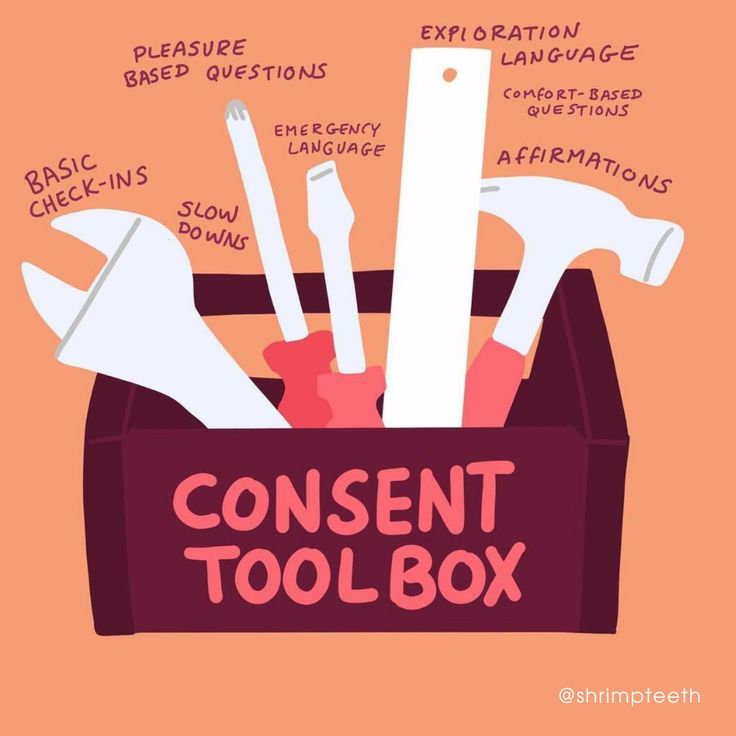
Consent: how to give it, how to read it, how to withdraw it. That it must be enthusiastic, clear, ongoing, and mutual — not assumed, pressured, or silent.\n- Pleasure: that it’s not just allowed, it’s important. That sex isn’t something done to you, but something shared, with your comfort and enjoyment at the centre.
-
Queer sex ed: because not everyone is cis and straight, and we all deserve to be seen. Safe sex, anatomy, identity, and relationships don’t only apply to heterosexual people.
-
Trauma-informed content: because some of us had already experienced harm. Because not all firsts are consensual. Because survivors deserve language, too.
-
Practical firsts: what your first pap smear might feel like. How to ask for protection. What happens in a sexual health clinic. How to prepare for your first sexual experience — emotionally, mentally, physically.
Instead, we got:
-
Condoms on bananas
-
Pregnancy scare videos
-
Abstinence speeches
-
Silence around LGBTQIA+ bodies and identities
-
No space for curiosity, safety, or self-respect
We should’ve been given:
-
A safe space to ask questions
-
Teachers who could answer them (or say “I’ll find out”)
-
Resources that reflected real, diverse experiences
-
A message that sex is not a test of worth, or morality, or fear
-
The truth: That you’re allowed to make informed choices — and you’re allowed to change your mind
If you didn’t get any of this, you weren’t behind.
You were underserved. Undervalued. Failed.
But the good news? You can catch up. Right here. Right now.
No shame. Just truth. And trust in your ability to learn what you were never taught.
8. Your Mental Health Is Part of Your Physical Health
We had biology. We had puberty. We had the “don’t get pregnant” talk.
But where was the mental health unit?
Where was the part of health class that said:
-
“Anxiety can feel like your chest tightening, your stomach flipping, your mind racing at 2am.”
-
“Depression might not look like lying in bed crying. It might look like nothing tastes good anymore. Like losing interest in things you used to love. Like a slow, quiet fog you can’t shake.”
-
“Trauma isn’t always loud. It can live quietly in your muscles, your sleep patterns, your reactions. It can hide in perfectionism or people-pleasing. It can show up years later.”
-
“Burnout isn’t just for adults. Teenagers get it too. Especially when you’re expected to ace school, do sports, maintain friendships, perform emotional labour, and be ‘fine’ all the time.”
We should have learned that the brain is not separate from the body — it is the body. And when something’s off in your mental world, it has physical effects:
-
Headaches
-
Fatigue
-
Digestive issues
-
Chronic pain
-
Irregular periods
-
Insomnia
-
Panic attacks
And yet, most of us learned to hide it.
To pretend we were okay. To turn our distress into silence.
Why? Because no one told us we were allowed to struggle.
What health class should’ve taught us:
-
That being overwhelmed is not weakness
-
That mental illness is not rare or shameful
-
That it’s valid to feel grief even when things look “fine”
-
That feelings don’t have to be fixed right away to be worthy of care
-
That self-harm, disordered eating, or shutting down are signals — not shameful secrets
-
That help exists — and you deserve it even if you’re not at your “breaking point”
Most of all, we should’ve been taught that:
-
Needing help is not failure
-
Asking for support is wisdom, not weakness
-
Feeling things deeply is not a flaw — it’s human
You are allowed to not be okay.
And you are allowed to ask for what you need to become okay again.
9. Everyone Deserves Health Literacy
The version of health class most of us received catered to:
-
Straight people
-
Cis people
-
Neurotypical people
-
Able-bodied people
-
White people
-
People who fit the textbook diagram of “normal” — whatever that means
But real classrooms — real people — don’t look like that.
They look like:
-
Girls who can’t relate to the period chart because they have PCOS and haven’t had a regular cycle in years
-
Trans students who are never mentioned, let alone affirmed
-
Non-binary students being forced to choose a side in “boys vs girls” puberty talks
-
Students from CALD communities who are balancing cultural silence and health confusion
-
Disabled students left out of the conversation entirely, like their bodies don’t count
-
Survivors of trauma who flinch every time a certain word or phrase is said without care
-
Neurodiverse youth who need health education that makes sense for how they learn and feel
And what we all needed was:
-
Accessible language that doesn’t require decoding
-
Visual aids that show all types of bodies — scars, stretch marks, binders, mobility aids, pigmentation, all of it
-
Culturally safe teaching that includes family dynamics, translation, and sensitivity to stigma
-
Trauma-informed frameworks that prioritise emotional safety and consent
-
Representation in every form — because health affects all of us, and the education around it should reflect that
Aletheia was born from that gap — the space where people were left out.
We’re here to rewrite the class notes for everyone who didn’t feel seen in the first version.
Because you deserve education that respects your whole identity.
Not just the version of you that fits into a textbook.
10. You’re Allowed to Ask More Questions
Maybe the most important thing health class should’ve taught us is this:
You’re allowed to not know everything.
You’re allowed to say:
-
“What does that mean?”
-
“Can you explain that differently?”
-
“Is this normal… for me?”
-
“What if I’m scared?”
-
“Where can I go if I need help with this?”
-
“That didn’t feel okay. What do I do next?”
You don’t need to have the right words the first time. You don’t need to impress the doctor, or sound clever in the nurse’s office, or pretend you’re not confused. You’re not a burden for asking questions. You’re not weak for needing clarity.
Curiosity isn’t disrespect.
It’s intelligence. It’s power. It’s the beginning of advocacy.
It’s how we:
-
Get second opinions
-
Push back on dismissals
-
Catch red flags early
-
Stay informed about our bodies
-
Make health decisions that reflect who we are, not just what we’re told
Because the best health class isn’t the one where everyone gets the same answer.
It’s the one where we’re all allowed to ask different questions.
You’re not behind. You’re not lost.
You’re just starting your real health education now — the kind built on truth, curiosity, courage, and community.
And we’re right here, learning with you.
Final Thoughts: Rewriting the Lesson Plan
Let’s be clear: we’re not here to shame every well-meaning health teacher who fumbled their way through a puberty slideshow while half the class giggled and the other half panicked. Most of them were doing their best with what they were given — and what they were given was often… not much.
But intention doesn’t undo impact. And for many of us, the impact was silence. Confusion. Misinformation. Or the sinking feeling that our bodies were strange, messy, shameful things we were meant to manage quietly — or not at all.
At Aletheia, we’re not rewriting the lesson plan because we’re angry.
We’re rewriting it because we believe you deserve better.
Better than vague metaphors and outdated worksheets.
Better than gender binaries and “don’t get pregnant” scare tactics.
Better than a world where discharge is taboo and pain is ignored and identity is erased.
You deserve:
-
Language that explains, not shames
-
Answers that empower, not overwhelm
-
Space that respects your identity, whether or not it fits inside a textbook
-
Resources that evolve with your body, your questions, and your voice
-
A community that says, “Same here. Let’s figure it out together.”
Because this was never just about health class.
This is about ownership. And access. And agency.
It’s about being allowed to know yourself — fully, truthfully, and without fear.
If no one ever taught you this stuff, you are not behind.
You are not broken. You are not late.
You were failed by a system, not by your curiosity.
And here’s the best part:
It’s not too late. It never was.
We are learning together now. And this time, we’re doing it right — with clarity, compassion, and courage. One word, one question, one truth at a time.
Welcome to the rewrite. This is your classroom now, too.
Originally published by The Aletheia Project on Substack.