Supporting a Friend
For when someone you care about is struggling: what to say, how to listen, when to bring in more help, and how to look after yourself.



Written by Dumini Manikkuwadu, Resource Development, The Aletheia Project. Developed by young people on Aletheia’s executive team, led by our Resource Development team. Checked against advice from headspace, Beyond Blue, ReachOut and Kids Helpline, and written to follow Mindframe guidance.
Supporting a Friend
Written by Dumini Manikkuwadu. A guide for young people aged 14 to 25 who want to be there for a friend, without needing all the answers and without carrying it alone.
Download (PDF) →Health Navigator & Self-Advocacy Journal
If your friend wants to see someone, the Health Navigator shows how to find and book a service, and the Journal helps them say what’s going on.
See the tools →✦What it is
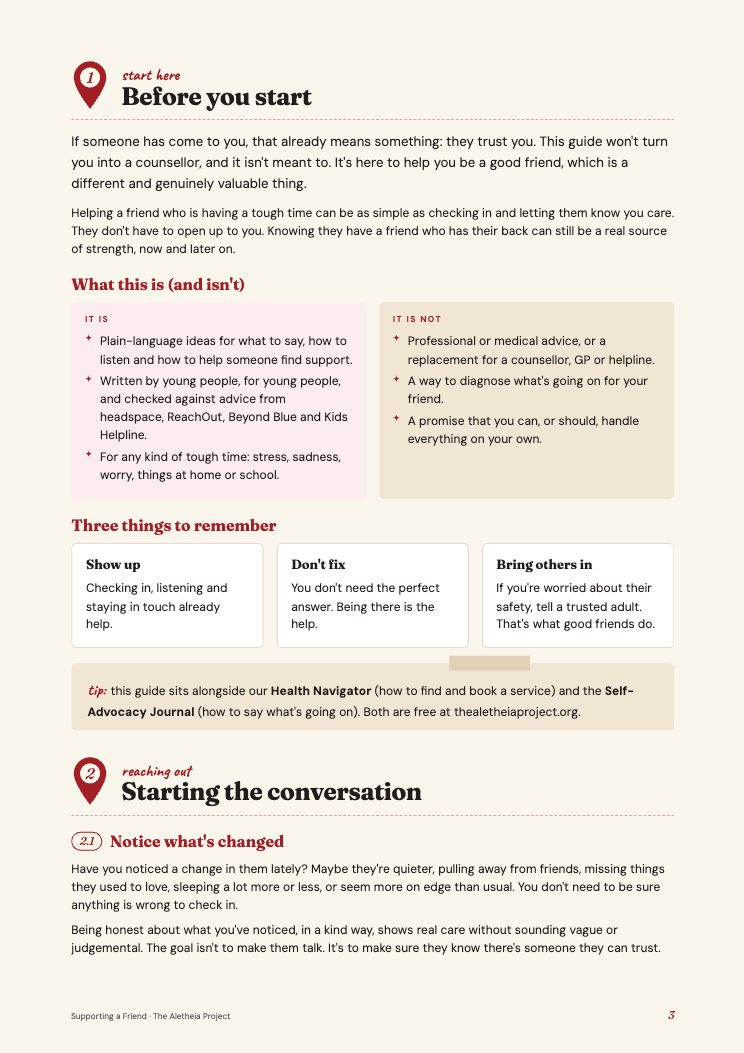
Young people often turn to friends first. This guide helps you show up, listen without fixing, and know when to bring others in. It isn’t professional advice, and it won’t turn you into a counsellor. It’s here to help you be a good friend.
New in version 1.1: more scenarios from our Resource Development team, including what to do when a friend says “Don’t tell anyone this, but…”, signs it’s time to bring in a trusted adult, what to say if they’re not keen on getting help, and what to do when supporting someone starts to feel too heavy.
It is
Plain-language ideas for what to say and how to listen, with “try saying” phrases, small scenarios and space to reflect.
It isn’t
Medical advice, a way to diagnose someone, or a replacement for a GP, counsellor or helpline.
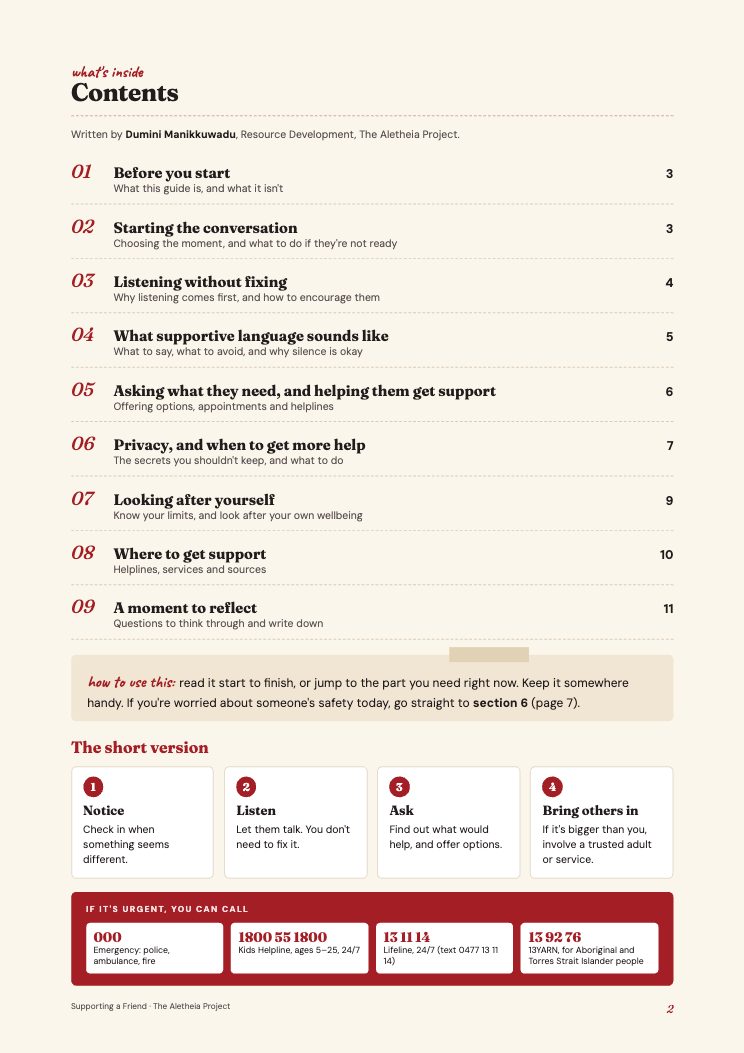
✦What’s inside
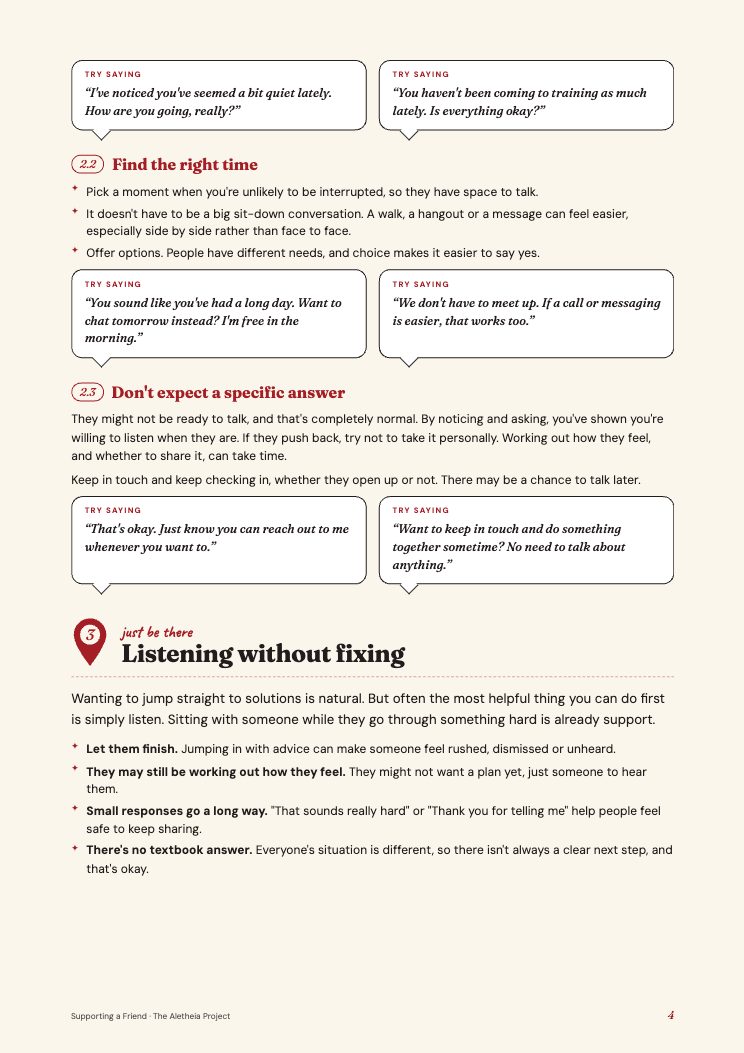
Start the conversation
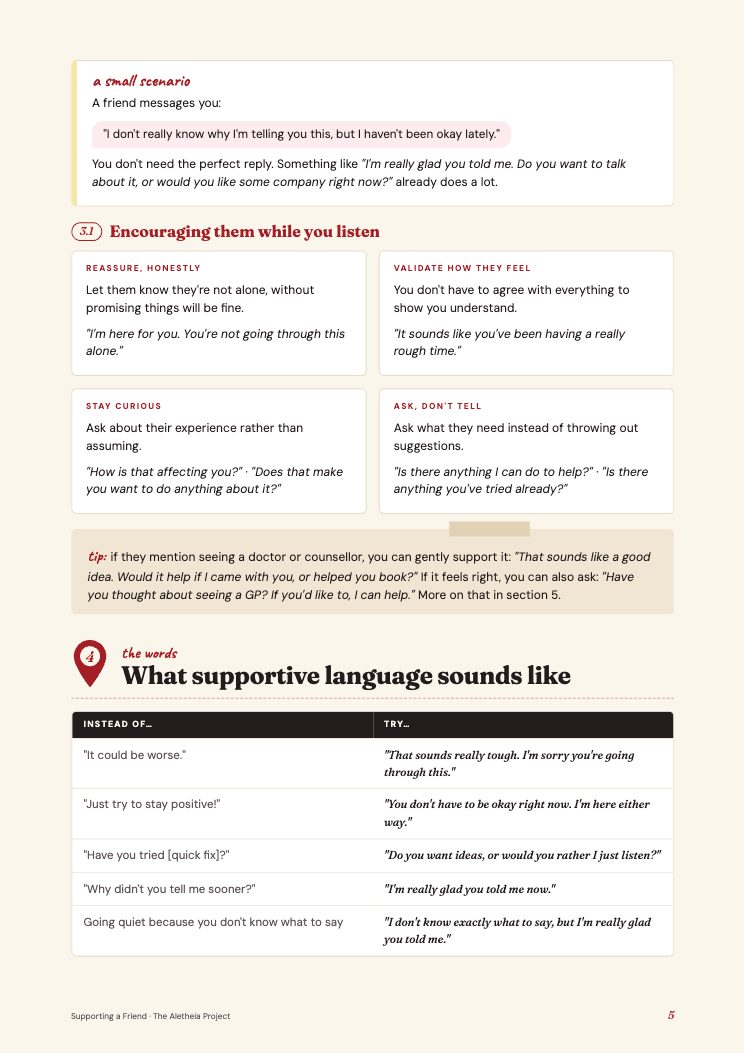
Notice and check in. Choose a good moment, and what to do if they’re not ready to talk.
Try: “I’ve noticed you’ve seemed a bit quiet lately. How are you going, really?”
Listen and support
Listen first. What supportive language sounds like, what to avoid, and why silence is okay.
Try: “Do you want ideas, or would you rather I just listen?”
Help them get support
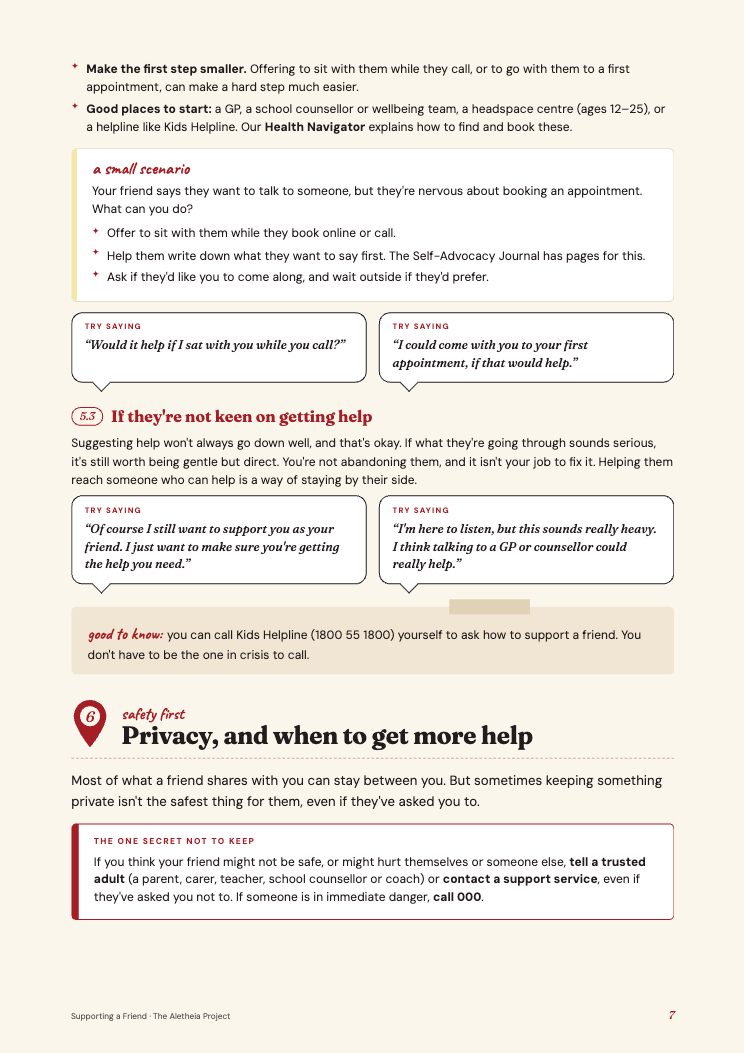
Offer, don’t push. Sitting with them while they call, or going to a first appointment together.
Try: “Would it help if I sat with you while you call?”
✦The one secret not to keep
Most of what a friend shares can stay between you. But if you think they might not be safe, tell a trusted adult (a parent, teacher, school counsellor or coach) or contact a support service, even if they’ve asked you not to. If someone is in immediate danger, call 000. Getting help isn’t a betrayal. It’s what a good friend does when something is bigger than the two of you.
✦Looking after yourself
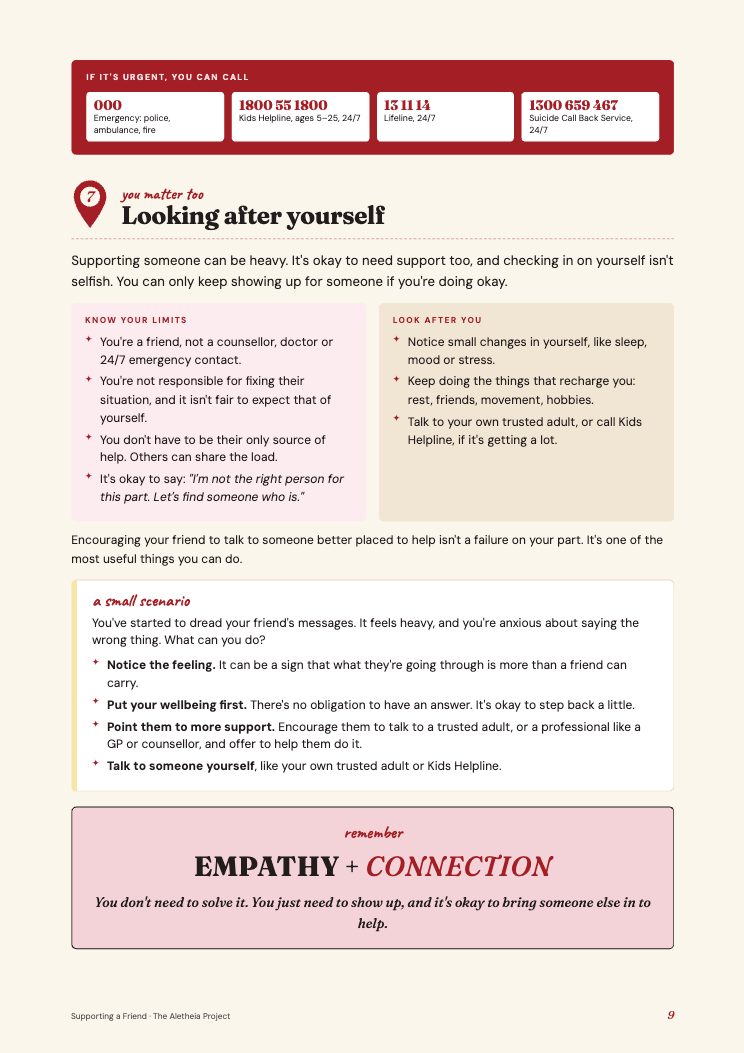
Supporting someone can be heavy. You’re a friend, not a counsellor or a 24/7 emergency contact, and it’s okay to need support too. You don’t have to be their only source of help. You can call Kids Helpline yourself to ask how to help a friend.
✦Where to get support
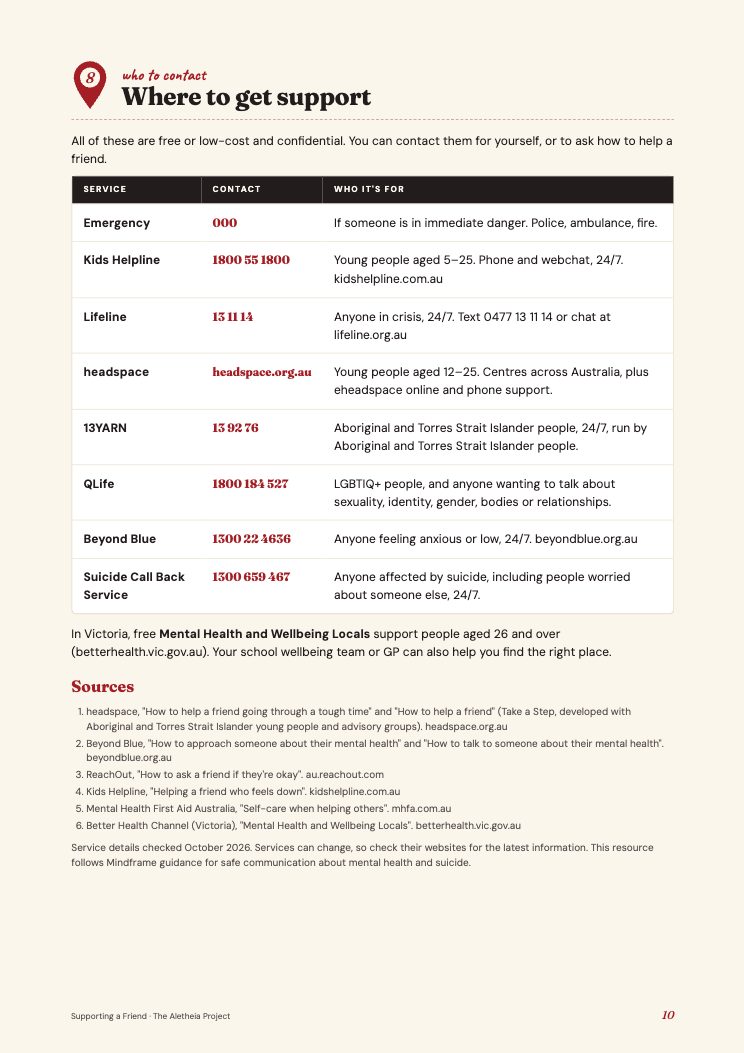
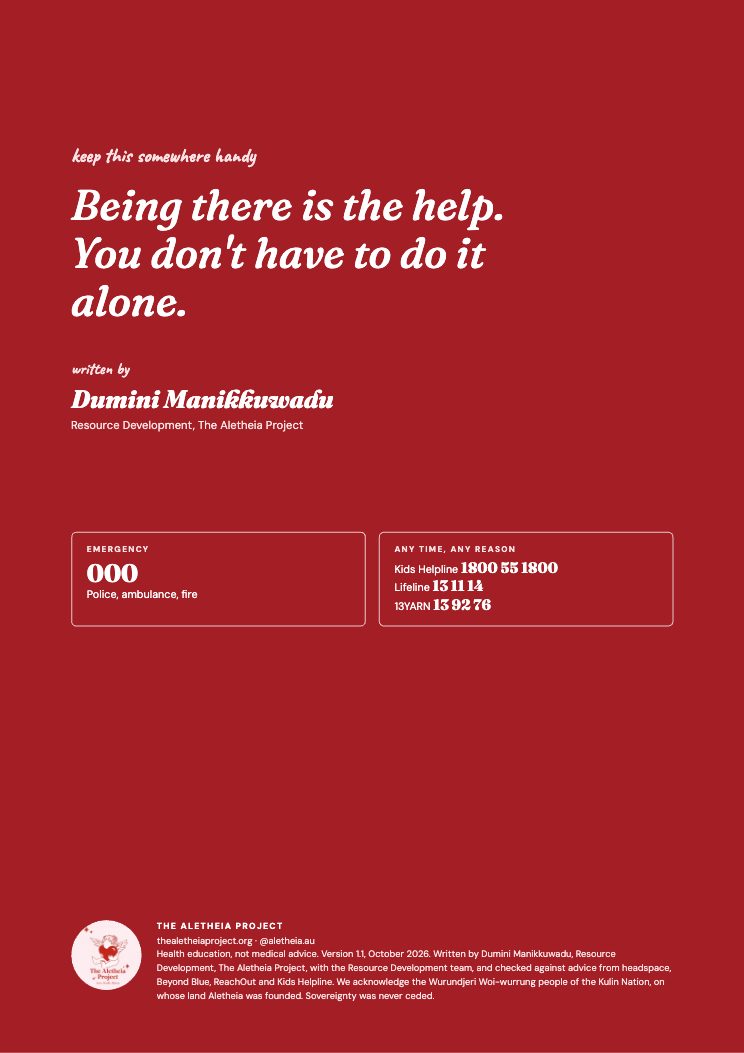
Emergency: 000 · Kids Helpline: 1800 55 1800 (ages 5–25, 24/7) · Lifeline: 13 11 14 (24/7, text 0477 13 11 14) · 13YARN: 13 92 76 · QLife: 1800 184 527 · Beyond Blue: 1300 22 4636 · Suicide Call Back Service: 1300 659 467 · headspace for young people aged 12–25 at headspace.org.au. Service details checked October 2026.
Download the guide, share it with a friend, or tell us what would make it more useful through our contact form. It will keep improving with feedback from young people.