The Grey Zone
There is a space in healthcare that very few people talk about, but many quietly experience. It is not the moment where something is clearly wrong, and it is not the moment where everything has been explained or resolved. It is the space in between. The space where something in your body feels different, but not enough to be taken seriously. Where you know something has shifted, but you cannot point to a clear reason why. Where you leave appointments without answers, carrying the same uncertainty you walked in with, just explained in more careful or technical language.
This is what many people come to recognise as the grey zone.
For young people in particular, this space can feel especially confusing. It often begins with something subtle. A change in energy that does not go away. A recurring discomfort that feels too consistent to ignore, but not severe enough to describe clearly. A pattern that doesn’t quite make sense, but keeps returning. At first, it feels like curiosity. You notice it, you question it, and then you try to explain it away. You tell yourself it might just be stress, or lack of sleep, or something temporary. But as time passes, the feeling remains. And without a clear explanation, the question slowly shifts from what is this? to am I imagining this?
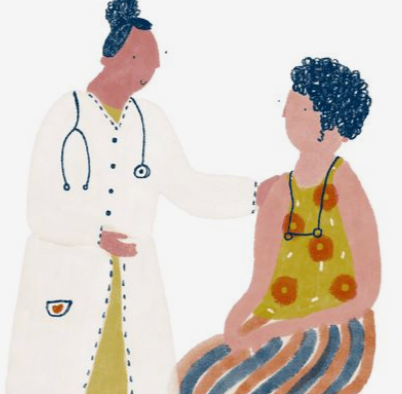
Eventually, you try to put it into words. You sit in a doctor’s office, or bring it up in conversation, and you attempt to describe what has been happening. But this is where things become difficult. What you are experiencing is real, but it does not fit neatly into language. It does not sound clear or urgent. It exists somewhere in between. You might say that it is not constant, but it happens often. That it is not exactly pain, but it is not nothing either. That something just feels off. And as you speak, even you begin to feel unsure, not because it isn’t real, but because it does not sound convincing.
In many cases, the response you receive is not outright dismissal. It is uncertainty. You might be told to monitor it, to come back if it changes, or that it could be a number of different things. These responses are not necessarily wrong. Medicine does not always provide immediate answers, and not everything can be diagnosed straight away. But what is rarely acknowledged is what it feels like to be the person living in that uncertainty. To leave without a name for what you are experiencing, without a clear plan, and without something concrete to hold onto.
Over time, this uncertainty can begin to turn inward. Without a diagnosis, it becomes easier to question yourself. Not loudly or dramatically, but quietly. You start to minimise what you are feeling. You tell yourself it is probably nothing, that you are overthinking, that other people seem fine. You compare your experience constantly to what you believe is normal. And because you do not have a label, it becomes harder to validate what you are going through. It can begin to feel like your body is speaking a language that no one else recognises.
One of the most difficult parts of the grey zone is the pressure to wait. If something is not serious enough to diagnose, it can feel like it is not serious enough to act on. So you wait for it to become clearer, more consistent, or more severe. You wait for it to become undeniable. But this waiting often comes with a cost. Instead of feeling supported, you feel like you are carrying something on your own, something that is not visible enough to be understood, but not small enough to ignore. You begin to wonder how bad it has to get before it counts.
At the same time, life continues. You still go to school, see your friends, complete assignments, and move through daily routines. From the outside, everything appears normal. But internally, something remains unresolved. It shows up in the way you pay more attention to your body than you used to, in the way certain thoughts linger, and in the quiet awareness that something has not yet been fully understood. You learn to carry that awareness without always knowing what to do with it.
Part of what makes this experience so isolating is that there is very little language for it. We have words for illness, for diagnosis, and for recovery. But we have far fewer words for the in-between. For the space where something exists but has not yet been defined. As a result, people often default to saying that it is nothing, or that they are probably fine. Not necessarily because it is true, but because there are no better words available.
In the absence of clear answers, one of the most important things a young person can hold onto is their own awareness. You notice your body more than anyone else does. You recognise patterns, even if they are not yet fully understood. You feel changes, even if they are difficult to explain. That awareness matters. It is not less valid because it cannot yet be named, and it does not need to be proven in order to deserve attention.
Being in the grey zone does not mean the conversation is over. Often, it simply means it continues over time. You may need to revisit the same concern, describe it again, or return with new observations. This process can feel repetitive or frustrating, but it is also how understanding develops. Clarity does not always arrive in a single moment. Sometimes it builds gradually, through persistence and attention.
The grey zone can feel like a place where progress is paused, but it is often part of the process itself. It is where observation happens, where patterns begin to form, and where questions slowly become clearer. It is not the absence of something, but the stage before it is fully understood.
Grey does not mean imaginary. It means that what you are experiencing has not yet been given the language, recognition, or explanation it deserves. And just because something does not have a name yet does not mean it is not real.

— The Aletheia Project
Originally published by The Aletheia Project on Medium.