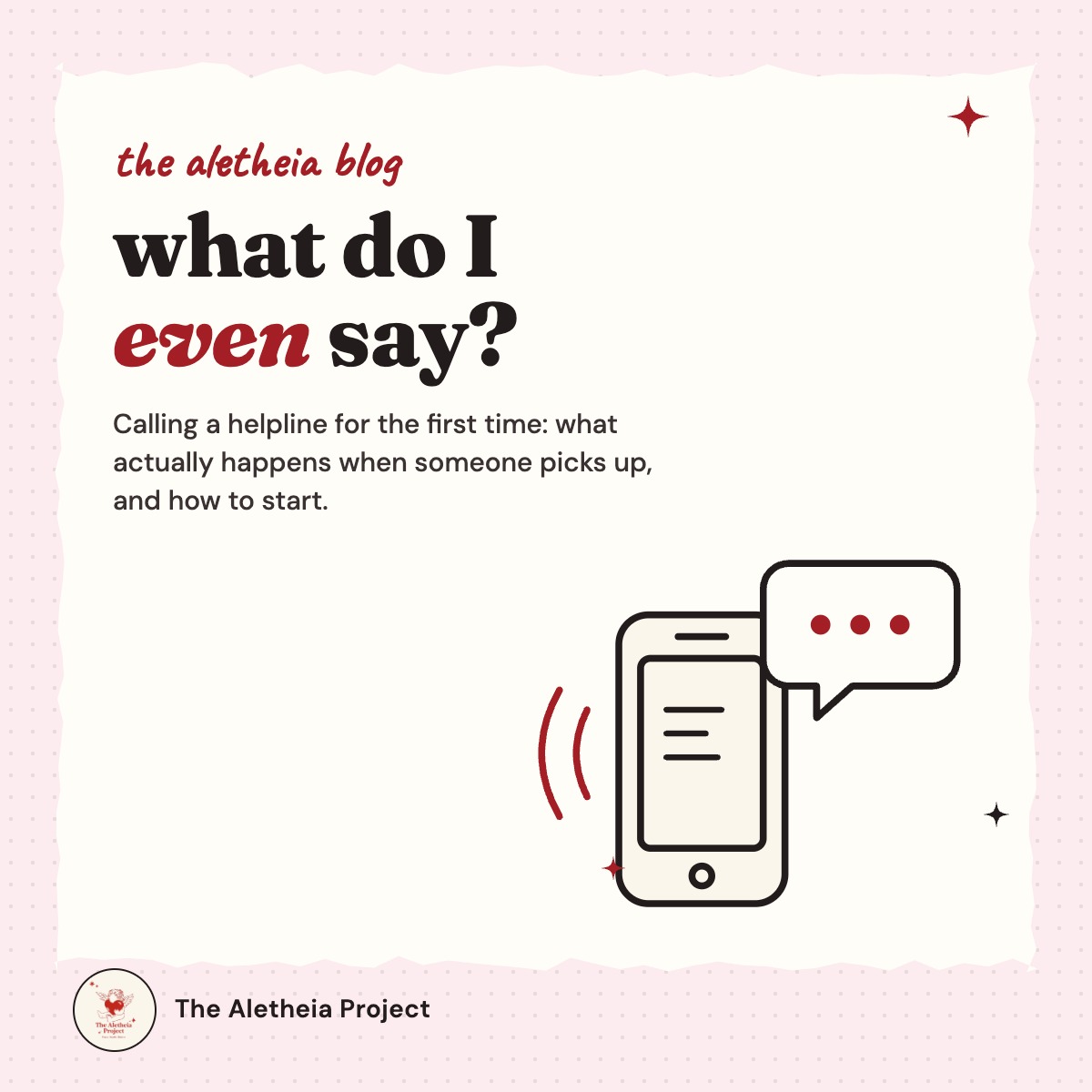
“what do i even say?”: calling a helpline for the first time
Content note: this post talks about mental health crisis support. If you or someone else is in danger right now, call 000.
You’ve had the number saved for weeks. Maybe it’s on the back of your student card. Maybe a teacher read it out at assembly and everyone half-listened. You’ve opened the keypad twice and closed it twice.
It’s not that you don’t know helplines exist. It’s that nobody ever told you what happens after someone picks up. What if you start crying? What if your reason isn’t “big enough”? What if you just freeze?
Saturday 10 October is World Mental Health Day, and this year’s theme from the World Health Organization is “lived experiences heard: real voices, real change”. Being heard starts somewhere, and for a lot of us it starts with one slightly awkward phone call. So let’s take the mystery out of it.
first, which one?
You’ll hear about a few services most often. They do slightly different things:
- Kids Helpline (1800 55 1800) is for people aged 5 to 25. It’s free, open 24 hours a day, every day, and you can call or use webchat. You talk to a counsellor.
- Lifeline (13 11 14) is for anyone in Australia, 24/7. You can also text 0477 13 11 14 or chat online. You talk to a trained crisis supporter.
- headspace online support lets you chat one-on-one with a clinician for free, 3pm to 10pm your local time, once you set up an account. It isn’t an emergency service, so it suits “I’ve been feeling off and want to talk it through” more than “I’m not safe right now”.
- 13YARN (13 92 76) is free, 24/7 crisis support with Aboriginal and Torres Strait Islander crisis supporters.
- QLife (1800 184 527) is free, anonymous LGBTIQ+ peer support, 3pm to 9pm every day.
If you’re under 26 and unsure, Kids Helpline is a solid place to start. And you can’t really pick the “wrong” one: if another service would suit you better, they’ll point you to it.
the first ten seconds
When you call Kids Helpline, you’ll hear a short recorded message about the service. Then a counsellor comes on the line and usually opens by asking what you’d like to talk about.
That’s it. No quiz. No form.
You might have to wait, especially in the evening. Kids Helpline says webchat waits can stretch to 40 or 50 minutes when it’s busy, and that phone is usually quicker. A wait doesn’t mean you don’t matter. It means a lot of people are reaching out, which is a good thing.
“but what do i actually say?”
Here’s the part nobody mentions: the people on the other end hear “I don’t really know why I’m calling” all the time. Kids Helpline says you don’t need to know what to say, that counsellors will help guide the conversation, and that there’s no rush.
ReachOut suggests an opener as simple as “I’m feeling overwhelmed, and I’m not sure what to do.” A few more that work:
- “Something’s been bothering me and I don’t know who else to tell.”
- “I’m not in danger, I just need to talk something through.”
- “I’m worried about a friend.”
- “I’ve never done this before, so I’m a bit nervous.”
That last one is underrated. Saying you’re nervous out loud often takes some of the nerves with it. And yes, you can call about a friend. You can call about school, family, a breakup, your body, your identity, or a feeling you can’t name yet. Kids Helpline is clear that no issue is too big or too small.
If your brain tends to go blank, ReachOut suggests writing down what’s on your mind first. Three dot points in your notes app is plenty.
what they’ll ask (and what they won’t)
You don’t have to give your name. Kids Helpline says plainly that if you’d rather not, that’s ok. ReachOut explains that helplines usually ask for a first name, a rough location and a short reason for calling, and won’t ask for your surname or address unless you or someone else is at risk of harm.
You don’t have to tell your parents you’re calling. And at Kids Helpline you can ask for a male or female counsellor, ask for an interpreter, or ask to speak with a counsellor you’ve talked to before.
is it really private?
Yes, with one exception you deserve to know about upfront. Kids Helpline says conversations are confidential. The exception is if you or someone else is in a life-threatening situation, at risk of significant harm, or if the law requires them to share information. Where they can, counsellors will talk with you about it first. Calls may be recorded for quality checks, and you can ask the counsellor to turn the recording off.
That exception isn’t a trap. It’s there for the moments when keeping a secret would mean someone gets hurt.
You don’t need a crisis to deserve a conversation. “Not that bad” is still worth saying out loud.
“i’m not sick enough to call”
This is the big one. So many of us wait until things are unbearable because we feel like we’d be wasting someone’s time. But these services are built for the in-between too: the rough week, the friendship going sideways, the thought that keeps looping at 2am. Reaching out early isn’t overreacting. It’s health literacy in action: knowing what support exists and using it before you’re running on empty.
And if the call ends and you feel a bit flat or awkward? Normal. One conversation won’t fix everything, but the person on the line can help you work out next steps, like seeing a GP, a school counsellor or a headspace centre.
what you can do
- Save the numbers now, while you’re calm. Kids Helpline 1800 55 1800. Lifeline 13 11 14 (or text 0477 13 11 14). Future you will be grateful.
- Pick your channel. Phone is usually fastest. Chat or text is completely fine if talking out loud feels like too much.
- Borrow an opener. Screenshot the lines above if it helps.
- Tell someone you trust that you’re reaching out, if that helps you follow through.
- Pass it on. Send this to a friend who has the number saved but has never used it.
- In an emergency, call 000. For sexual assault, domestic or family violence, 1800RESPECT is available 24/7 on 1800 737 732.
This post is general information, not medical advice.
In voice and solidarity,
The Aletheia Project