everyone is talking about the cornell 7. here’s what actually happened.
Content note: this post talks about sexual assault. Support lines are at the bottom. You can stop reading whenever you need to.
I didn’t go looking for the Cornell 7. It found me the way most things do now. Late at night, half asleep, thumb scrolling on its own.
First it was a stitched video. Then a screenshot of a timeline. Then a post from someone who never posts about the news, just three words on a black background: I am Jane Doe.
That was the one that made me stop.
Before I say anything else
I want to be careful, because this is a real person’s life and the lives of seven other people too.
What I’m writing about are allegations. Nobody has been charged. Nobody has been convicted. Lawyers for some of the men deny wrongdoing. I don’t know what happened in that house, and I’m not going to pretend I do.
What I do want to sit with is something else. How one young woman’s account moved through a system, and what happened to it along the way.
What happened, as far as I can piece together
In October 2024, a Cornell student, now known as Jane Doe, says she was sexually assaulted by seven members of the Chi Phi fraternity at their house after being given alcohol and drugs, according to CBS News. The chapter was later closed and barred from campus.
She went to Cornell University Police in November that year and gave a sworn statement. The local district attorney decided not to prosecute.
Cornell ran its own Title IX process. AP, via ABC News, reported it involved 50 interviews with 32 witnesses. Two men were expelled and two suspended. Two were found not responsible, and one had already graduated, per CBS News.
And then, for almost two years, the wider world didn’t really know.
That changed in September 2026, when she filed a civil lawsuit against Cornell and the seven men. A student editor at the Cornell Daily Sun had been working on the story for a long time, and her reporting helped carry it out of Ithaca and onto everyone’s phones. I keep thinking about that part. A student, doing the slow work, until people had to listen.
After that, things moved quickly.
In late September the district attorney reopened the case and said he planned to take it to a grand jury, ABC News reported. On 2 October, New York’s governor appointed the state attorney-general as special prosecutor, per ABC News. The district attorney accepted it, saying “we were not provided the full picture by the University.”
Over this weekend, Cornell’s president released an eight-minute video saying the university “must do better,” the Cornell Daily Sun reports. He promised an outside law firm review and a “serious look” at fraternities and sororities, per ABC Australia.
The number I keep coming back to
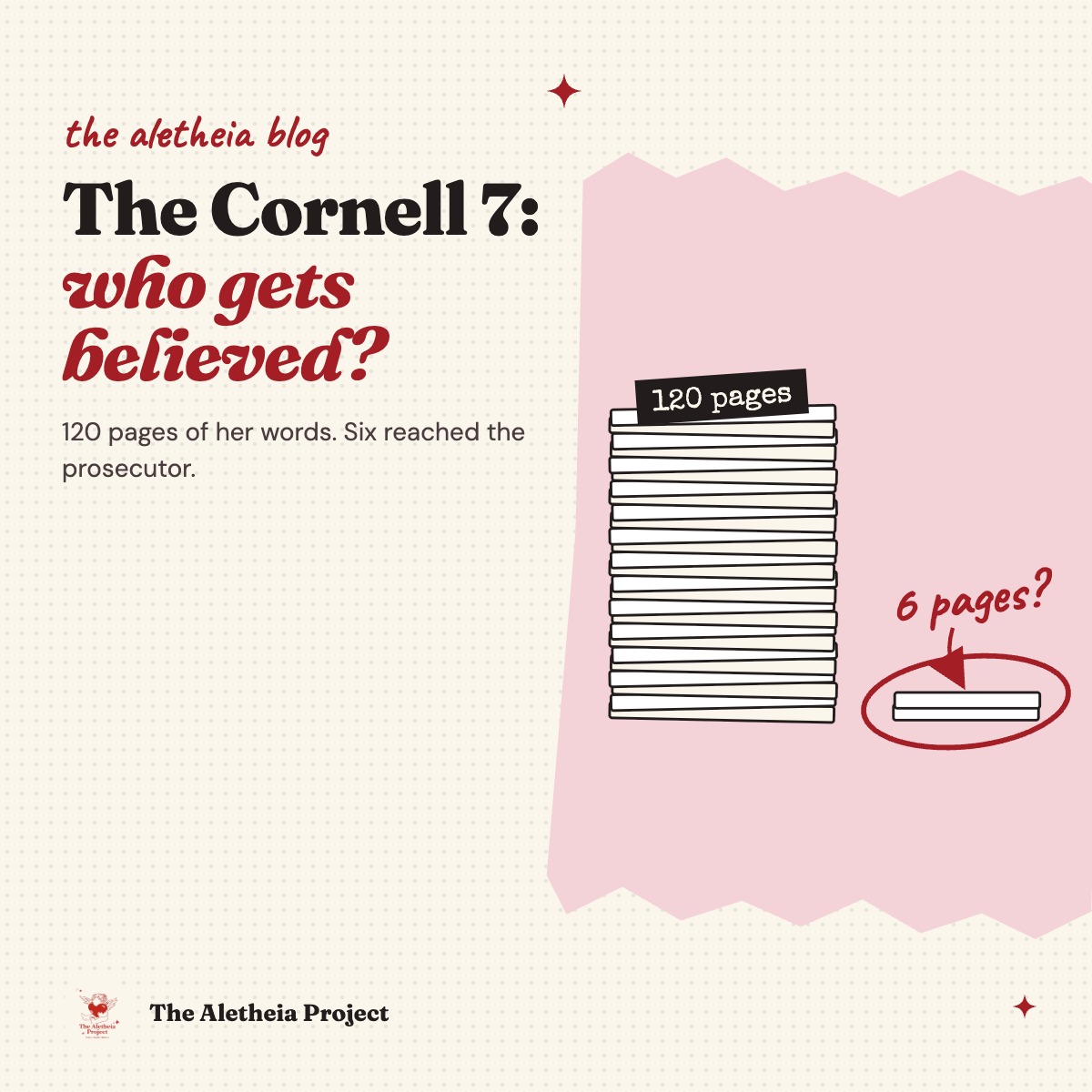
Six.
When the district attorney declined to charge anyone in 2024, he was working from a six-page statement. Her full interview transcript was around 120 pages, CNY Central reports.
Somewhere in those 120 pages, she told police she could say “with 100% confidence I was raped,” according to ABC17 News. Of those transcripts, the district attorney said “I never saw it, never heard it,” per CBS News.
He had described her account as “voluntary, conscious, and consensual,” LA Magazine reports. But ABC News found that even the shorter 2024 statement includes her saying part of the night “felt like coercion.”
I read that line a few times.
I honestly don’t know how a 120-page interview becomes six pages. Maybe there’s a normal, boring, procedural reason. Maybe summaries are just how the system works. But if I could ask the people involved one thing, it would be this: when you shortened her words, what did you decide didn’t matter?
The governor asked her own version of that question. She wanted to know how a prosecutor could “not interview her or even request the full transcript,” per ABC News.
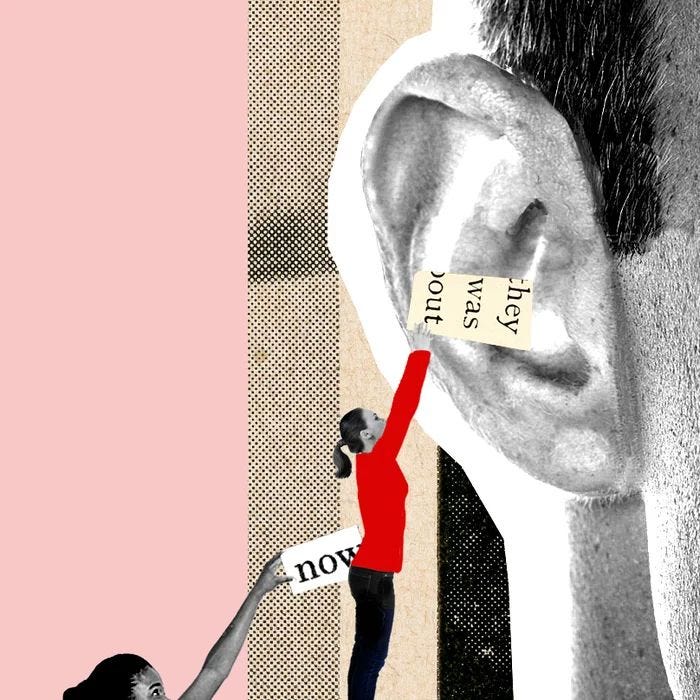
A young woman’s words should not get shorter every time they change hands.
The law I’d never heard of
Until this week I had no idea New York had what people are now calling a “voluntary intoxication loophole”.
As NBC New York explains, the state’s law treats someone as unable to consent because of intoxication only if the substance was given to them without their consent. If you chose to drink, the law sees you differently. The governor now backs changing that, saying “voluntary intoxication is not a license for sexual assault.”
Not everyone reads it the same way. New York’s criminal defence lawyers’ association argues “intoxication is not a defense to sexual assault” under existing law, per Newsweek. I’m not a lawyer, and I’m still working out who’s right on the technical side. What I notice is how fast “she was drinking” became the centre of the conversation online.
Watching the internet react
Scrolling through it all felt like watching two conversations at once.
In one, women were posting “I am Jane Doe” across TikTok, X and Instagram after attempts online to reveal her identity, IBTimes reports. One creator wrote: “It’s the person sitting beside you in class.” That line stayed with me longer than I expected.
In the other, people were counting her drinks. Some TikTok creators argued her drinking undermined her account, and others answered that saying yes to one thing doesn’t mean yes to everything after it, per IBTimes.
Meanwhile, more than 1,000 alumni signed a letter to the Cornell Daily Sun asking for reform, and twenty student groups have a “Justice for Survivors” protest planned for Monday afternoon in Ithaca.
There’s a part of this I’m uneasy about too. Reason’s Robby Soave has written about the men being doxxed and threatened, even though none of them has been charged, and about a stranger who shares one man’s name getting caught up in it. I believe survivors deserve to be heard. I also don’t think a comment section is a courtroom. I’m still holding both of those.
Why I can’t stop thinking about it from here
Ithaca is a long way from Melbourne. It still doesn’t feel far.
In Victoria, affirmative consent laws that commenced in 2023 say a person doesn’t consent if they’re so affected by alcohol or another drug that they can’t, Victoria Police News explains. The law doesn’t have a separate rule for someone who chose to drink.
Laws matter, but they aren’t the whole thing. The 2021 National Student Safety Survey found one in 20 Australian university students had been sexually assaulted since starting uni. And La Trobe researchers, writing in The Conversation, point out that prevention aimed at individuals can end up shifting responsibility onto the people most at risk.
At Aletheia, most of what we write about is young people trying to be heard in a doctor’s office. This isn’t that. But the feeling is familiar. You explain something carefully, for a long time, and what gets written down is shorter and quieter than what you said.
What you can do
- Don’t share her identity, or theirs. A special prosecutor is investigating now. Let that happen.
- Say something when the drinking comments start. A quick “that’s not really the point” in a group chat counts.
- Know the law where you live. Respect Victoria’s explainer on affirmative consent is short and worth sending to a friend.
- Know where care is. In Victoria you can get medical care and a forensic examination without deciding yet whether to go to police.
- Believe first. If a friend tells you something happened, you don’t need perfect words. “Thank you for telling me. What do you need?” is enough.
If you need support
- 1800RESPECT: 1800 737 732 (24/7, national)
- Sexual Assault Crisis Line (Victoria): 1800 806 292 (24/7, whether or not you want to report)
- Kids Helpline: 1800 55 1800 (ages 5 to 25)
- In danger right now? Call 000
This is general information, not legal or medical advice. I’ll keep following this one.
For truth, voice, and empowerment,
The Aletheia Project
Sources
- ABC News, District attorney reopens case of alleged Cornell University ‘gang rape’: https://abcnews.com/US/district-attorney-reopens-case-alleged-cornell-university-gang/story?id=136806149
- ABC News, Gov. Hochul questions DA in Cornell ‘gang rape’ case: https://abcnews.com/US/attorney-general-letitia-james-appointed-special-prosecutor-cornell/story?id=136937149
- ABC News, Cornell student said sexual encounters ‘felt like coercion’ in 2024 statement: https://abcnews.com/US/cornell-student-encounter-fraternity-house-felt-coercion-2024/story?id=136876885
- ABC News (AP), Woman told Cornell investigators she ‘felt like bait’ during alleged gang rape: https://abcnews.com/US/wireStory/woman-told-cornell-investigators-felt-bait-alleged-gang-136963907
- ABC Australia, Cornell president vows ‘serious look’ at fraternities, sororities: https://www.abc.net.au/news/2026-10-04/cornell-president-vows-serious-look-at-fraternities-sororities/107227132
- ABC7 New York, Attorney General Letitia James appointed special prosecutor in Cornell case: https://abc7ny.com/story/cornell-gang-rape-case-letitia-james-appointed-special-prosecutor/19898750/
- ABC17 News, Mood at Cornell University darkens amid mounting pressure on investigators: https://abc17news.com/news/2026/10/04/cornell-president-breaks-silence-amid-outcry-over-handling-of-sex-assault-case/
- CBS News, Details emerge in case of former Cornell student alleging gang rape by fraternity members: https://www.cbsnews.com/news/cornell-university-rape-allegations-chi-phi-fraternity-details/
- CNY Central, What changed: Hochul cites new 120-page interview transcript: https://cnycentral.com/news/local/what-changed-hochul-cites-new-120-page-interview-transcript-in-cornell-rape-case-shift-governor-attorney-general-letitia-james-university-chi-phi-fraternity-matthew-van-houten-facebook-twitter-x-instagram
- LA Magazine, What changed between Jane Doe’s 2024 police statement and her lawsuit: https://lamag.com/crimeinla/cornell-seven-what-changed-between-jane-does-2024-police-statement-and-her-lawsuit/
- NBC New York, Cornell case sheds light on ‘voluntary intoxication’ loophole in NY rape law: https://www.nbcnewyork.com/news/local/cornell-case-sheds-light-on-voluntary-intoxication-loophole-in-ny-rape-law-what-is-it/6554972/
- Newsweek, New York targets legal loophole that could doom Cornell rape investigation: https://www.newsweek.com/new-york-targets-legal-loophole-that-could-doom-cornell-rape-investigation-12518526
- The Cornell Daily Sun, ‘We Owe it to Jane Doe’: Cornell President addresses backlash: https://www.cornellsun.com/article/2026/10/we-owe-it-to-jane-doe-cornell-president-addresses-backlash-over-handling-of-alleged-chi-phi-gang-rape
- The Cornell Daily Sun, Letter to the editor: Decades of Jane Does, 1,000 alumni demand action: https://www.cornellsun.com/article/2026/10/letter-to-the-editor-decades-of-jane-does-1000-alumni-demand-action
- The Cornell Daily Sun, Twenty student organisations to host ‘Justice for Survivors’ protest: https://www.cornellsun.com/article/2026/10/twenty-student-organizations-to-host-justice-for-survivors-protest-at-cornell
- Mediaweek, This is the student journo who broke the ‘Cornell 7’ story: https://www.mediaweek.com.au/this-is-the-student-journo-who-broke-the-cornell-7-story
- IBTimes UK, ‘I Am Jane Doe’ goes viral in solidarity: https://www.ibtimes.co.uk/social-media-jane-doe-cornell-7-case-1823284
- IBTimes UK, Cornell 7 case sparks TikTok debate: https://www.ibtimes.co.uk/tiktok-debate-cornell-7-allegations-investigation-reopened-1823054
- Reason, The Cornell rape lawsuit is fueling a deranged social media mob: https://reason.com/2026/10/01/the-cornell-rape-lawsuit-is-fueling-a-deranged-social-media-mob/
- Slate, How campus police should have responded to Jane Doe: https://slate.com/news-and-politics/2026/10/cornell-seven-news-campus-police-jane-doe-fail.html
- The Conversation (via Canberra Daily), The ‘Cornell 7’ reported rape shows why we need to rethink sexual violence prevention: https://canberradaily.com.au/the-cornell-7-reported-rape-shows-why-we-need-to-rethink-sexual-violence-prevention/
- Victoria Police News, Sexual offences in Victoria: reporting, support and the affirmative-consent reforms: https://vicpolicenews.com.au/sexual-offences-in-victoria-reporting-support-and-the-affirmative-consent-reforms/
- Universities Australia, 2021 National Student Safety Survey national report: https://universitiesaustralia.edu.au/wp-content/uploads/2022/03/2021-NSSS-National-Report.pdf
- Respect Victoria, What does it mean to give consent?: https://www.respectvictoria.vic.gov.au/news/affirmative-consent
- 1800RESPECT: https://www.1800respect.org.au/
- Sexual Assault Crisis Line (Victoria): https://www.sacl.com.au/
- Kids Helpline: https://kidshelpline.com.au/