what doctors could learn from listening to young people
I don’t think most doctors are trying to dismiss young people.
But I do think a lot of us leave appointments feeling like we weren’t really heard.
Not in a dramatic way. Nothing obviously wrong happened. The doctor wasn’t rude, they didn’t ignore you, they probably even helped in some way.
But there’s still this quiet feeling afterwards, like something didn’t quite land. Like you said everything you needed to say, but it didn’t fully register on the other side.
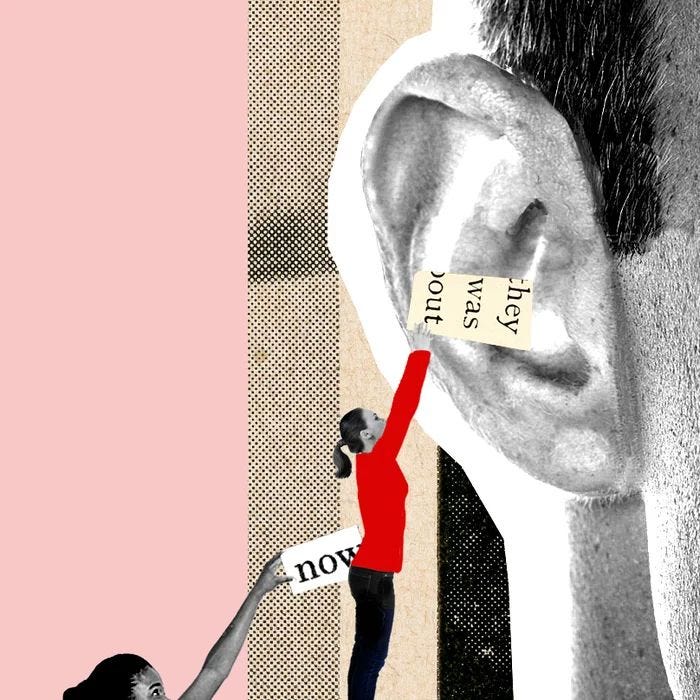
And I think a big part of that comes down to how young people are listened to.
It’s not that we don’t speak, it’s how we’re heard
Most young people don’t walk into appointments unprepared.
We think about what’s been happening. We notice patterns. We try to explain it as clearly as we can, even if we don’t always have the right words.
But a lot of the time, what we say gets filtered.
It gets simplified, or redirected, or explained away pretty quickly. Sometimes before we’ve even finished.
And I get why that happens. Doctors are working with time pressure, experience, patterns they’ve seen before.
But it also means that sometimes the conclusion is reached too early.
And when that happens, the original concern gets lost.
There’s a lot of assumptions around young people
This is probably the biggest thing.
There’s this underlying idea that young people:
- overthink things
- are influenced by what they see online
- don’t fully understand their own bodies
And again, that’s not always said directly. But you can feel it.
It shows up in how quickly something is labelled as stress. Or hormones. Or just “normal.”
And sometimes it is those things.
But sometimes it isn’t.
And if you start from the assumption that a young person is probably exaggerating or misunderstanding, you’re already not really listening to what they’re actually saying.
We actually know more about our own bodies than people think
Not in a medical sense. We’re not doctors.
But we do live in our bodies every day.
We notice when something changes. When something feels off. When something doesn’t match what’s normal for us.
And we often sit with that for a while before saying anything.
So by the time we bring it up, it’s usually not random.
It’s something we’ve thought about.
Even if we don’t explain it perfectly, the experience itself is real.
And I think that gets underestimated.
What happens when you don’t feel heard
It doesn’t just stay in that one appointment.
You start second guessing yourself.
You wonder if you’re overreacting. If you explained it badly. If it’s even worth bringing up again.
And next time, you might say less.
Or you might not go back at all until it gets worse.
That’s the part that actually matters.
Because it’s not just about whether one appointment went well or not. It’s about whether someone feels comfortable coming back, speaking up, and trusting the system.
And for a lot of young people, especially if there are other barriers like culture, language, or identity, that trust is already fragile.
Listening doesn’t have to be complicated
This isn’t about expecting doctors to do something unrealistic.
It’s small things.
Letting someone finish without interrupting.
Asking one more question before deciding what it is.
Taking what’s being said at face value first, instead of immediately reframing it.
That’s it.
Not overhauling the whole system. Just slowing down slightly in that moment.
This isn’t about challenging doctors
It’s about working better together.
Doctors have knowledge we don’t have. That’s obvious.
But patients have something doctors don’t have either, which is direct, ongoing experience of what’s happening in their own body.
And if those two things actually meet properly, the outcome is better.
Why this matters
Young people today are more aware of their health than ever.
We ask questions. We look things up. We try to understand what’s going on.
That shouldn’t be seen as a problem.
It should make things easier.
But it only works if that effort is taken seriously.
Just listen properly
That’s really what this comes down to.
Not listening to reply. Not listening to fix it immediately.
Just listening properly first.
Because most young people aren’t asking to be right.
We’re just asking to be taken seriously.
And that alone would change a lot.
The Aletheia Project
Originally published by The Aletheia Project on Medium.