“Don’t Ask That”
Let’s be honest.
Some of us didn’t grow up in houses where “health” was an open topic.
We grew up in homes where whispering was the norm. Where aunties used coded language to talk about anything remotely related to sex or periods. Where “down there” was said with the same horror as Voldemort’s name. Where questions about our bodies were met with, “Don’t ask that. You’ll understand when you’re older.”
Well… now we’re older.
And guess what? We’re still confused. Still ashamed. Still wondering how we’re supposed to take care of our health when we were never given the words — let alone the permission — to talk about it.
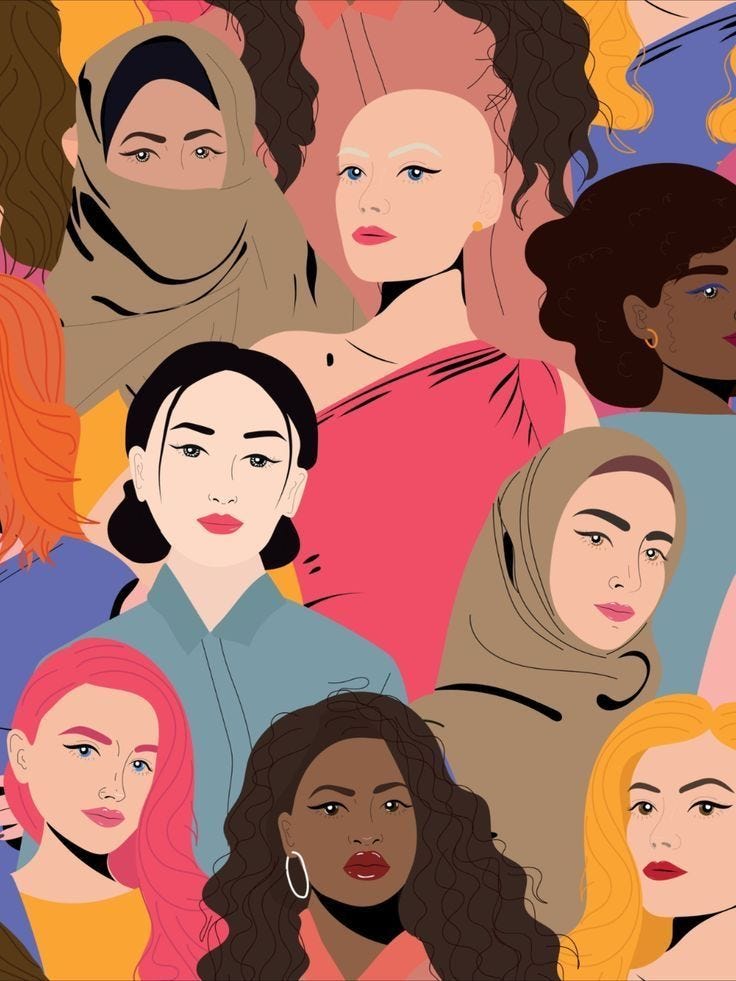
This one’s for the CALD girls.
The girls from culturally and linguistically diverse backgrounds — where culture, family, community, and shame are tightly intertwined like a too-tight braid you weren’t allowed to take out.
We’re going to talk about:
-
Why shame around health is so common in our communities
-
How silence can become dangerous
-
And how to start unlearning that shame — without rejecting who we are
Because we love our cultures. But we need them to evolve with us, not against us.
“That’s private.” (Translation: Don’t talk about it. Ever.)
In many cultures, the body is considered sacred — which, in theory, is beautiful.
But somewhere along the way, sacred started to mean secret. And secret started to mean shameful.
It goes like this:
You get your period. You’re told to hide it.
You feel pain. You’re told it’s normal.
You try to ask about sex, or discharge, or what a cervix even is. The room goes silent.
And you realise, fast, that some things are just not meant to be discussed.
This silence isn’t always malicious. It comes from generations of survival. From a time when women didn’t have medical rights, or privacy, or autonomy. Where talking too openly was seen as disrespectful or dangerous.
But when silence is passed down long enough, it doesn’t just feel like tradition. It feels like a law. And breaking it makes you feel like a bad daughter. A bad girl. An embarrassment.
So we don’t talk.
And because we don’t talk — we don’t learn.
And because we don’t learn — we don’t know how to speak up.
And because we don’t speak up — we get dismissed, misdiagnosed, or ignored altogether.
“Respect your elders.” (But what if my elder doesn’t believe in tampons?)
Raise your hand if you’ve ever felt personally victimised by generational health advice.
Like:
-
“Don’t drink cold water when you’re on your period, it’ll freeze your uterus.”
-
“Tampons will take your virginity.”
-
“Don’t talk about sex, it’ll make you want it.”
-
“We never had problems with hormones back then.”
Look, some traditional advice is comforting. It connects us to our roots. Ginger tea and hot packs? Iconic. Cultural remedies have value. But we can hold that value without letting it override science, consent, or our right to understand our bodies.
And sometimes — respectfully — our elders are just wrong. Not because they’re bad. Because they weren’t taught either.
That’s where the courage kicks in. Not in disrespecting tradition, but in choosing to evolve it.
“You’re a good girl.” (So you don’t talk about your body, right?)
In many cultures, “purity” is prized. You’re taught to be a “good girl” — obedient, modest, quiet. Especially around anything to do with your body.
The problem? Health doesn’t care if you’re “good.” Period pain, yeast infections, STIs, mental health struggles — these things don’t skip over polite girls. They don’t wait until marriage. They don’t pause just because your parents never said the word vagina out loud.
So we become fluent in silence.
We learn to:
-
Hide pads up our sleeves
-
Whisper health questions to friends instead of doctors
-
Pretend we’re fine because telling someone means admitting something
Some of us have even internalised the idea that knowing too much about your body makes you… inappropriate. Dirty. Rebellious. Fast.
But here’s the truth:
Taking care of your health isn’t rebellion. It’s responsibility.
And it’s brave. Especially when the people around you make it hard.
“We don’t talk about that here.” (But the body keeps the score.)
Let’s pause the cultural part for a second and get real about the medical implications of this silence.
Because shame doesn’t just make you awkward.
It makes you:
-
Avoid the doctor when you’re bleeding too much
-
Lie about symptoms because you’re afraid they’ll get back to your family
-
Stay quiet during appointments because you don’t have the words — or the confidence — to say what’s wrong
And that can mean:
-
Delayed diagnoses
-
Misunderstood conditions
-
Unnecessary suffering
Take endometriosis. It affects 1 in 9 women, yet it takes on average 6–8 years to get diagnosed — often longer for CALD women, because they’re more likely to:
-
Downplay their symptoms
-
Be dismissed by health professionals
-
Lack access to culturally sensitive care
Silence can be life-altering. Even life-threatening.
We don’t have the privilege of not talking about this anymore.
Okay… but how do we talk about it when we were never taught how?
This is where it gets tricky — and also, unexpectedly, beautiful.
Because unlearning shame doesn’t mean cutting ties with your culture.
It doesn’t mean rejecting your parents or rolling your eyes at every traditional remedy. It doesn’t mean choosing “modern” over “cultural” or burning every book of advice you were ever given.
It means rewriting your relationship with your culture.
It means keeping the warmth and the rituals and the language and the spices — and leaving behind the fear, the silencing, the guilt.
You don’t have to destroy your heritage to heal inside it.
You just have to be willing to speak a truth your grandmother never got the chance to.
Here’s how to start — softly, boldly, awkwardly, and in your own time.
1. Use the words. Even if your voice shakes.
Say “vagina.” Say “pain.” Say “I don’t think this is normal.”
Say them out loud, even if it feels like you’re breaking some ancient rule.
Because silence is a habit — and habits can be unlearned.
Language is power. Not just because it communicates, but because it names. And when you have the language to name your experience, you also have the power to challenge it, explain it, defend it, or get help for it.
Start small. You don’t have to declare anything in front of your whole family. You can:
-
Say “discharge” in a group chat with trusted friends
-
Write “pain scale: 7/10 today” in a journal
-
Look in the mirror and say the word “vulva” without laughing or flinching
The first time might feel ridiculous.
The second time might feel rebellious.
But eventually, it will feel like self-respect.
Let yourself get used to hearing your own voice tell the truth.
2. Make space for awkward conversations.
No one wants to be the first to bring it up — especially in cultures where silence has been passed down like a family recipe.
You don’t have to launch into a TED Talk with your mum over dinner.
You don’t have to spill everything in one brave, bold moment.
You can just plant a sentence.
If she says, “It’s nothing — you just need rest,” try saying:
“I actually read something recently and I think it might be more than that.”
That’s it. One sentence.
You don’t even have to explain further right away. You’ve already cracked the door open.
These conversations don’t have to be confrontations. They can be experiments in honesty — tiny ones.
Sometimes you’ll get silence. Sometimes, an eye roll. Sometimes, worry that comes out as anger.
But sometimes, you plant a seed. And weeks or months later, your mum might say, “Hey… what was that thing you mentioned again?”
And suddenly, your act of bravery isn’t just helping you. It’s changing her, too.
That’s what generational change looks like. Not overnight revolutions.
But slow, quiet courage — passed on gently.
3. Laugh when it helps. Cry when it needs to happen.
Humour is one of the most powerful tools for survival.
Especially when it comes to things we were never allowed to say out loud.
Sometimes you have to laugh — at how your aunty still believes papaya juice causes miscarriage, or how you once thought using a tampon meant you’d lose your virginity (thanks, Year 7 lunch table myths).
That laughter doesn’t mean your experience is silly.
It means you’re reclaiming it.
But also — sometimes, the shame sits heavier than expected.
Sometimes it hits you at the pharmacy counter, when you realise you’re whispering to the pharmacist like you’re doing something wrong.
Or when a doctor talks over you, and you don’t speak up — not because you don’t care, but because your whole life you were told not to make a fuss.
Or when you think about how long you’ve been in pain and wonder how different your life might’ve been if someone had explained things earlier.
It’s okay to cry. Crying doesn’t mean you’ve failed to be confident.
It means you’re letting go of the pressure to carry everything alone.
Let yourself feel both: the laughter and the grief.
That’s what healing looks like. Not one emotion — but honest ones.
4. Find your people.
If you’re reading this, you already have.
But truly: you are not the only one figuring this out in the dark.
There are others — girls, women, queer youth, CALD kids — navigating this same tightrope between culture and autonomy.
Find those people. Build your own soft corner of the world where questions aren’t scary and saying “I don’t know what’s going on with my body” is met with, “Same, let’s figure it out together.”
They might be:
-
Online communities (like @aletheia.project 😉)
-
Group chats with friends who actually listen
-
Teachers or mentors who speak with kindness, not judgment
-
A cool older cousin who once whispered to you that she got her period at 11 and thought she was dying
You don’t need a whole army. Just one safe person is enough to start.
Support doesn’t have to look like activism.
It can look like sitting next to each other on a bus, whispering, “Did your boobs ever just… randomly hurt for no reason?”
And someone saying, “YES. Constantly. You’re fine.”
That’s the magic of a community — even a tiny one.
It turns shame into shared experience. It turns silence into solidarity.
5. Let your culture evolve — not erase you.
This is the biggest one. And the most complicated.
You might feel like understanding your health makes you less connected to your culture. Like by using medical terms, or asking questions, or wearing period underwear instead of pads folded in toilet paper, you’re somehow betraying where you came from.
You’re not.
You are adding to your culture — not subtracting from it.
Culture is not static. It grows. It changes. It adapts to the needs of the people it holds. It becomes stronger when we give it truth.
You can:
-
Track your ovulation with an app and still fast with your family during Ramadan
-
Say “vulva” and still use your grandmother’s herbal remedies when you’re sick
-
Read feminist health essays and still tie a rakhi on your brother’s wrist every year
You don’t have to pick one. You just have to make room for both.
The old ways that no longer serve you? Let them go with grace.
The ones that bring comfort and wisdom? Keep them — and make them yours.
You are not disrespecting your roots by choosing to bloom differently.
You are just choosing to bloom where there’s light.
6. Expression: Let yourself say it in your own way.
Talking about your body doesn’t have to sound like a doctor’s office.
You don’t have to memorise anatomical words or give a PowerPoint presentation on discharge patterns.
You can say:
-
“It’s a weird pulling feeling”
-
“I just feel off”
-
“It’s kind of sharp, but also dull?”
-
“My pain feels like something’s squeezing me from the inside out.”
You don’t have to be perfectly articulate. You just have to be honest.
Find whatever expression feels like you. That might be:
-
Journaling
-
Voice-memoing
-
Drawing how your pain feels
-
Writing metaphors that help you name what hurts
-
Making memes about how ridiculous periods are
Expression is what turns confusion into clarity.
It doesn’t have to be neat. It just has to be real.
7. Build a line of support.
You are allowed to build your own chain of safety. It doesn’t have to include your family — not at first. But you do need someone.
It could be:
-
A friend who lets you say, “Can I tell you something weird I’ve never told anyone?”
-
A teacher who checks in after class
-
A school nurse who doesn’t roll their eyes
-
A mentor who sees your questions as strength, not weakness
Even if they don’t have the answers, having someone who holds space for your questions is everything.
And eventually — when you’re ready — that chain might grow to include people in your family too. A cousin. A sibling. Even a parent. People surprise us.
But until then, build what you need. Carefully. Deliberately.
And know that Aletheia is part of that chain, too.
Final Thoughts
You were never given the script. That’s not your fault.
But you are writing the next one — and that makes you powerful.
Unlearning shame is hard. It takes time. Sometimes it feels like walking barefoot over old family expectations.
But every step is yours.
Every word you say, every question you ask, every story you share — it matters.
You don’t have to do it all at once.
Just start with one word. One whisper. One line of truth.
And we’ll be right here — cheering you on.
Always.
With eternal love and support,
The Aletheia Project
Originally published by The Aletheia Project on Substack.