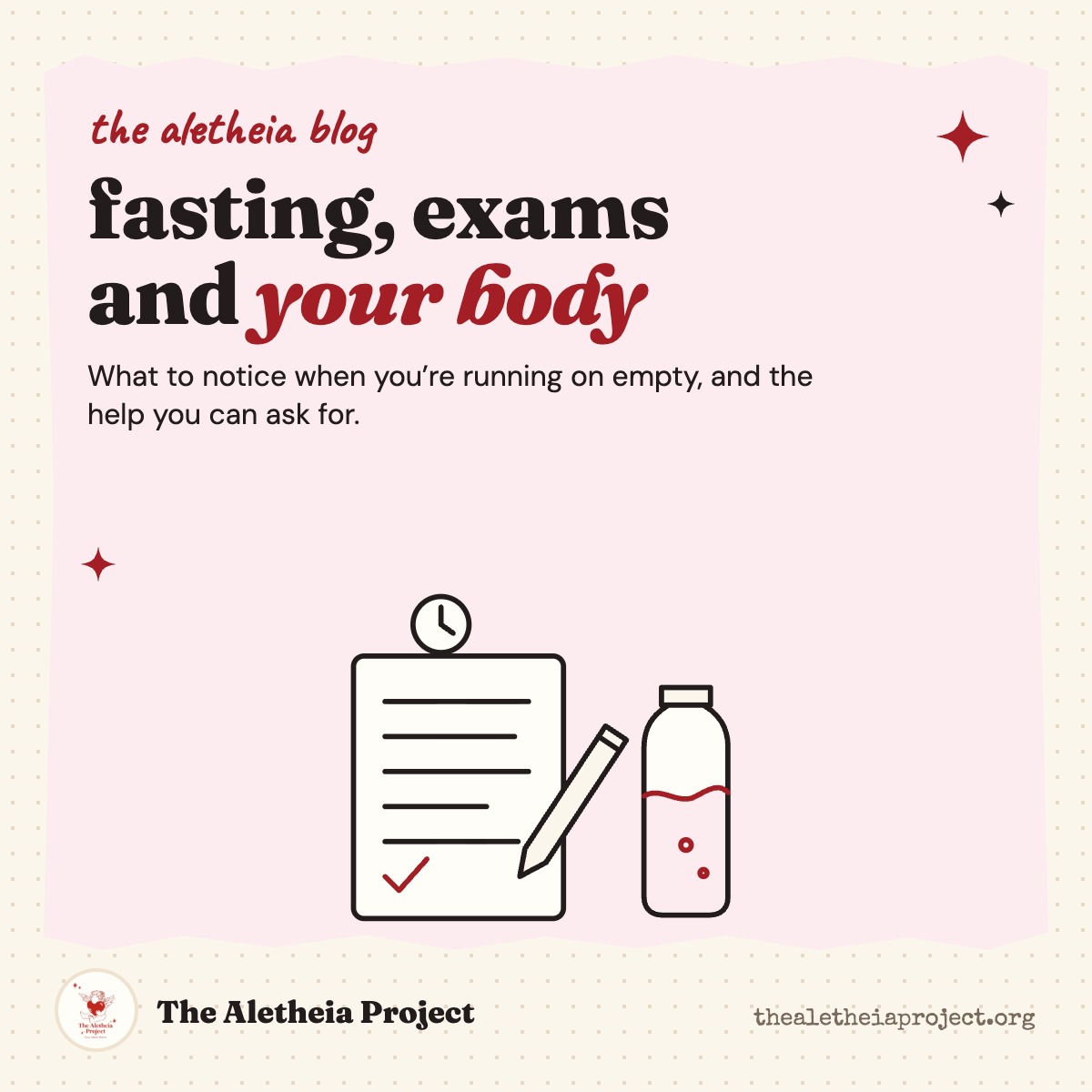
“i’ll eat after the exam”: fasting, exams and your body
Exam season does strange things to how we eat.
Some of us are fasting, for faith, for family tradition, or for reasons that are ours to keep. Some of us just stop eating without deciding to: nerves kill your appetite, breakfast feels impossible, and lunch becomes a muesli bar eaten over a practice paper at 4pm.
Victoria’s VCE written exams run from 27 October to 18 November this year, and other states and universities are in the thick of it too. So this one is practical. Not a lecture on what you should eat, and not a comment on why anyone fasts. Just what your body is doing when it runs on empty in a hot exam hall, the signs worth noticing, and the help you are allowed to ask for.
Your brain notices before you do
When you have gone a long time without food or water, the first signs are often easy to blame on stress.
Healthdirect lists the early signs of dehydration as thirst, a dry mouth, dizziness or light-headedness (especially when you stand up), headaches, dark-coloured wee and weeing less often. Tiredness and confusion show up as it gets worse.
Low blood sugar can look similar. For people who have diabetes, healthdirect describes hypoglycaemia as feeling shaky or sweaty, weak, dizzy or light-headed, very hungry, irritable or teary, with a faster heartbeat or blurry vision.
Read that list again and think about how many of those you have put down to “just exam nerves”. Some of the time, that is exactly what it is. Some of the time, your body is asking for water.
How much water are we actually talking about?
The Better Health Channel says your body has no way to store water, so it needs fresh supplies every day. Its guide for 14 to 18 year olds is about 1.6 litres of fluid a day for girls and 1.9 litres for boys, and more when it is hot or you are moving a lot.
If you are fasting during daylight hours, that means the hours you can eat and drink do a lot of work. If you are not fasting but forgetting to drink, a water bottle on the desk while you study is the least glamorous and most useful study tool you own.
Looking after your body in exam season isn’t a distraction from studying. It is part of how you get through the paper.
If you have a health condition, talk to someone first
If you have diabetes, take regular medicine, or live with any condition that affects how your body handles food and fluid, have a conversation with your GP before you fast, and ideally before exams start. Healthdirect notes that people with diabetes who take certain medicines can be at risk of low blood sugar, and dehydration risk is higher with diabetes too.
That conversation is not about anyone telling you what to do with your faith or your choices. It is about having a plan: what to watch for, what to carry, and what to do if you start to feel unwell partway through a three-hour paper.
And a gentle check-in, because it matters: if skipping meals has started to feel like a way to feel in control, or you notice you are using “I’m too busy to eat” as a cover, that is worth talking about. The Butterfly Foundation’s National Helpline (1800 33 4673, 8am to midnight, seven days) is there for exactly this, with no judgement.
The exam rules most students never hear about
Here is the part that surprised us. In Victoria, the VCAA has a system called special provision, and it exists for students whose health affects their exams.
- Special Examination Arrangements can be approved for students with disabilities, illnesses or other circumstances. They can include rest breaks (typically 10 minutes per hour of writing time), extra time, a separate room, and for some conditions, such as diabetes, permission to have food, drink or medication. Your school applies on your behalf, so it starts with a conversation with your VCE coordinator.
- Emergency arrangements exist if you get sick on the day of, or during, an exam. The school can contact VCAA Special Provision to request them.
- A Derived Examination Score (DES) can apply if you are significantly affected by a sudden illness, injury or personal trauma at exam time. You need evidence from an independent professional, such as a doctor, and the closing dates are on your personal exam timetable.
Two things the VCAA is clear about. First, you are advised to still attend every exam, rather than skip one because you don’t feel at your best. Second, if you feel unwell during an exam, tell the supervisor, and let your VCE coordinator know as soon as possible, before or after.
Not in Victoria? Every state and university has its own version of this. Ask your school or your uni’s exams office what they call it and how to apply. The worst outcome of asking is a two-minute conversation.
Why this is a voice thing, not just a food thing
So many students sit through an exam feeling faint, sick or foggy and say nothing, because speaking up feels like making a fuss, or like admitting you are not coping.
We think that silence is the real problem. Supports like these exist because exams are meant to measure what you know, not how well you can push through feeling unwell. Using them isn’t cheating or special treatment. It is the system working the way it was designed to.
What you can do
- Plan your eating and drinking windows. If you are fasting, think about what and when you eat and drink outside fasting hours, especially the night before and the morning of an exam.
- Know your early signs. Dizziness, headache, dry mouth, shakiness and brain fog are information, not weakness.
- Have the GP conversation early if you have diabetes, take regular medicine, or have a condition affected by fasting.
- Talk to your VCE coordinator (or exams office) now, not the morning of. Ask what arrangements exist and what evidence you would need.
- If you feel unwell in the exam, tell the supervisor. Then tell your coordinator as soon as you can.
- Look out for your mates. If a friend looks pale and shaky outside the hall, a water bottle and a “you okay?” go a long way.
For health advice any time, healthdirect’s free nurse line is 1800 022 222. If exam stress is getting heavy, Kids Helpline (1800 55 1800) and Lifeline (13 11 14) are there 24/7. If someone is very drowsy, confused or unconscious, call 000.
This post is general information, not medical advice. Your GP knows your situation best.
Good luck with the rest of exam season. Look after the body that is carrying you through it.
In voice and solidarity,
The Aletheia Project
Sources
- VCAA: VCE examination timetable
- VCAA: VCE Exams Navigator, Special Provision
- VCAA: Special Examination Arrangements for VCE external assessments
- healthdirect: Dehydration
- healthdirect: Hypoglycaemia (low blood sugar)
- Better Health Channel: Water, a vital nutrient
- Butterfly Foundation: National Helpline