“can i just get antibiotics?”: what nobody tells you about the pills we all share
You’ve had a sore throat for three days, you’ve got an assignment due on Friday, and you just want something that will fix it fast. So you go to the GP hoping to walk out with antibiotics. Instead you’re told to rest, drink fluids and come back if it gets worse. It can feel like being brushed off.
Most of the time, it isn’t. And this week is a good week to explain why. World AMR Awareness Week runs from 18 to 24 November 2026, and the World Health Organization’s theme this year is “One Health, one action: Prevent AMR now”. AMR stands for antimicrobial resistance. It’s one of those huge health issues nobody explains properly at school, even though it comes down to everyday decisions all of us make.
what antibiotics actually do
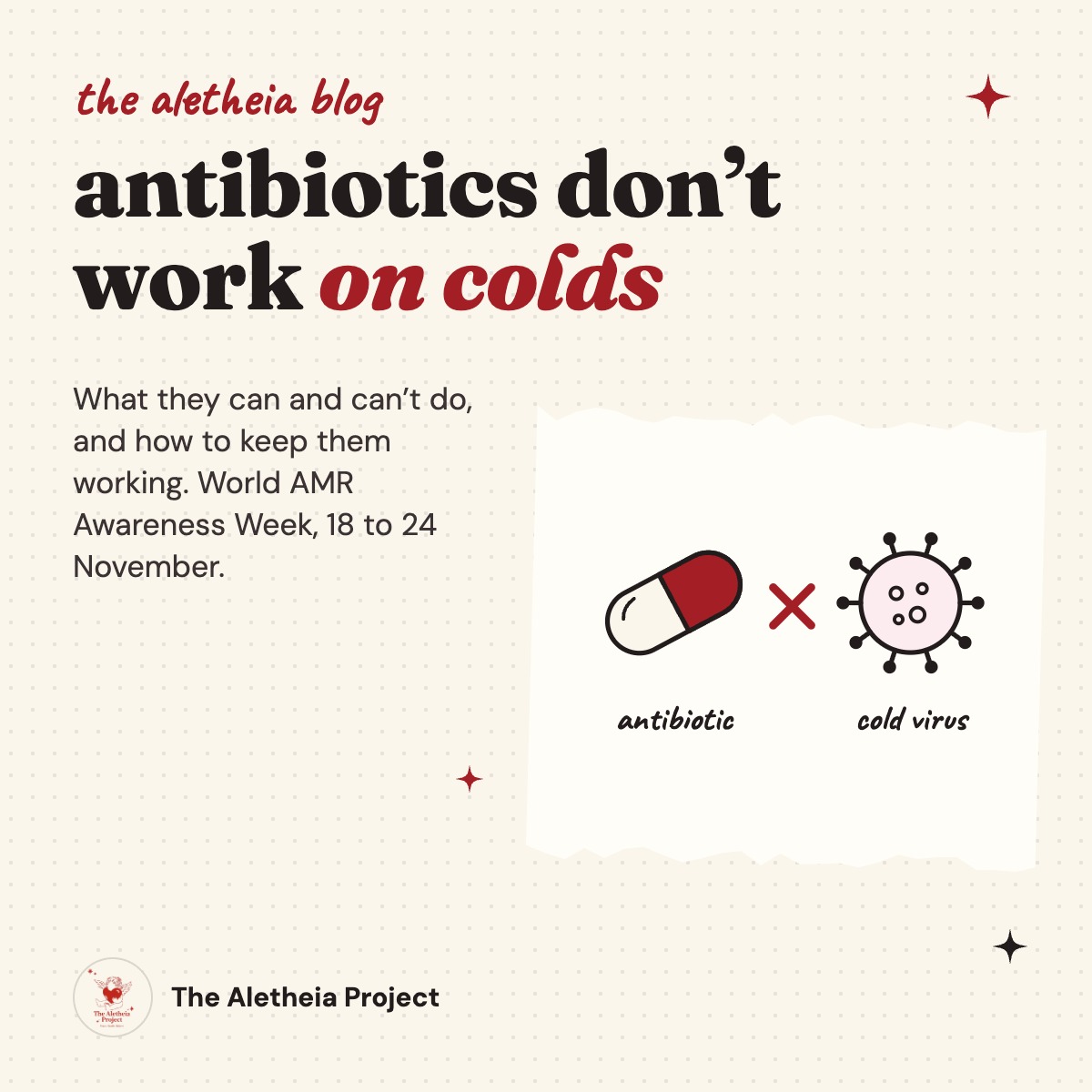
Antibiotics are made to fight bacteria. That’s their whole job. The Australian Government’s AMR site puts it simply: antibiotics only fight bacteria, and they do nothing against viruses. Healthdirect adds that viruses cause most colds, flu and COVID-19.
So if your sore throat or blocked nose is caused by a virus, an antibiotic won’t treat it. It can still give you side effects, though. Healthdirect lists diarrhoea, nausea and vomiting, and thrush in the mouth or vagina among the common ones.
That’s why a good GP might say “let’s wait and see”. It isn’t your doctor doubting you. It’s your doctor working out whether the thing making you sick is something an antibiotic can actually fix.
so what is resistance, exactly?
Here’s the part most people get wrong. Antibiotic resistance doesn’t mean your body gets “used to” antibiotics. Healthdirect explains that it happens when bacteria change to protect themselves from an antibiotic, so the medicine no longer works to kill them.
Both healthdirect and the Australian Government name antibiotic use as the main cause. The more antibiotics are used, especially when they aren’t needed or aren’t taken properly, the more chances bacteria get to adapt. The WHO says misuse and overuse, like taking antibiotics when they’re not needed or taking the wrong type, remains one of the main drivers of AMR worldwide.
When an infection is resistant, healthdirect says people can be sick for longer, have more complications, need more complex care and stay infectious for longer.
why this is a big deal, not a boring one
The global numbers are hard to ignore. The WHO estimates that bacterial AMR was associated with more than 4.7 million deaths worldwide in 2021, and that about 1 in 6 lab-confirmed bacterial infections around the world were resistant to antibiotics in 2023.
We’re not sharing that to scare you. We’re sharing it because antibiotics belong to all of us. Every time they’re used well, they keep working a little longer for everyone, including the friend, sibling or grandparent who might really need them one day.
Antibiotics are a shared resource. Using them well isn’t about being a “good patient”. It’s about making sure they still work when someone you love needs them.
the “finish the course” question
You’ve probably heard “always finish the whole packet”. The more accurate version is: take your antibiotics exactly as you were told. Healthdirect says to take them at the right time and for as long as you’re told to, even if you feel better, and not to take more than you were told to, even if there are tablets left over.
Not sure how long you’re meant to take them, or you’ve missed a dose? Ask your pharmacist. That’s exactly the kind of question they’re there for.
A few other things nobody tends to explain:
- Don’t share them. Healthdirect is clear on this one. Your friend’s leftover tablets were prescribed for a different infection and a different body, and the Australian Government’s advice is to only take antibiotics a doctor prescribes for your condition.
- Don’t save leftovers “for next time”. Return any tablets you don’t use to a pharmacy.
- Ask about your other medicines. Check with your doctor or pharmacist whether anything else you take shouldn’t be mixed with your antibiotic. The Consumer Medicine Information leaflet that comes with it covers this too.
- Know what’s an allergy and what isn’t. Healthdirect notes that nausea and vomiting are not an allergic reaction. If you think you’re having a severe allergic reaction, call triple zero (000).
how to say it at the GP
Talking about antibiotics with a doctor can feel awkward, especially if you were hoping for a script. A few things you can say:
- “Do you think this is a virus or a bacterial infection? How can you tell?”
- “What should I watch for that means I need to come back?”
- “If I do need antibiotics, how long should I take them for, and what side effects are common?”
- “I was told years ago I’m allergic to penicillin. Is that worth checking?” Healthdirect notes that many people believe they’re allergic to penicillin, and that in most people antibiotic allergies disappear after a few years.
Asking these questions isn’t being difficult. It’s being part of the decision, which is exactly where you belong.
what you can do
- Don’t ask for antibiotics for a cold or the flu. They don’t treat viral infections.
- When you do need them, take them exactly as directed, for as long as you were told.
- Return leftovers to the pharmacy instead of keeping or sharing them.
- Help prevent infections in the first place. The Australian Government points to regular hand washing and keeping your vaccinations up to date.
- Got a medicine question? Ask your pharmacist, or call healthdirect’s 24/7 line on 1800 022 222.
- Pass it on. Next time someone says “just get antibiotics” for a cold, you’ll know what to say.
This post is general information, not medical advice. If you’re unwell or worried, see your GP or pharmacist, and in an emergency call 000.
In voice and solidarity,
The Aletheia Project