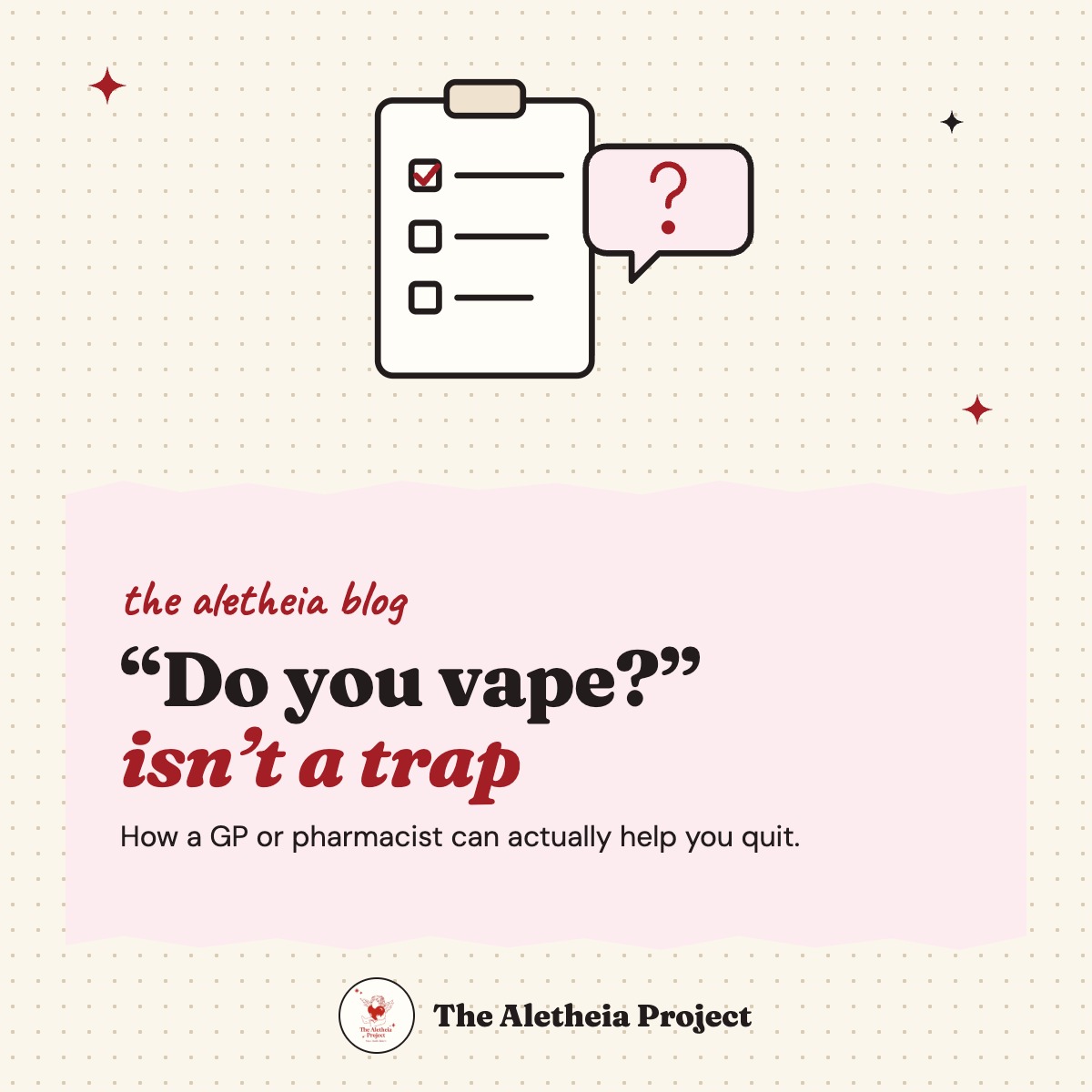
“do you vape?”: why that question isn’t a trap
Most of us have been asked it. On a health form, in a GP appointment, maybe by a school nurse. “Do you smoke or vape?” And most of us have answered the same way: a quick “no”, a shrug, or a “sometimes, like, at parties” that we hope nobody follows up.
Here’s the thing. That question isn’t a trap. It’s an open door. And almost nobody walks through it, because nobody ever explained what’s on the other side.
So let’s do that.
Why the question gets dodged
If you vape, or used to, you probably have reasons for keeping quiet. You might worry you’ll get in trouble, that your parents will find out, or that you’ll get a lecture instead of help. You might not even think of it as a “real” habit yet. Plenty of people only realise how often they’re reaching for a vape when they try to go a day without one.
You’re also not alone. In the 2022–23 national survey of secondary students, 30% of students had tried vaping at least once, and 22.1% of 16 and 17 year olds had vaped in the past month. A more recent national survey of 14 to 17 year olds found vaping fell between 2022 and 2024, which tells us something important: lots of young people are quitting, or never starting. It can be done.
But “lots of people quit” doesn’t help much when you’re the one with the cravings, at 11pm, mid-exam season.
What the rules actually are now
The vape rules in Australia changed a lot in 2024, and a lot of people are still working off old information. Here’s where things stand, according to the Australian Government Department of Health:
- Vapes can only legally be sold in pharmacies, and only to help people quit smoking or manage nicotine dependence.
- Anyone under 18 needs a prescription to get one.
- Adults 18 and over can buy vapes with nicotine of 20 mg/mL or less without a prescription, but they have to talk with the pharmacist first, and can only buy one month’s supply at a time.
- Higher nicotine strengths need a prescription at any age.
What this means in practice: the brightly coloured vapes sold under the counter at a convenience store are not legal products. Nobody is checking what’s in them or how much nicotine they contain. That’s not a scare tactic; it’s just why the system was changed.
What a GP can do (that you might not know)
A GP isn’t just there to tell you vaping is bad. You probably already know that part. What they can actually do is help you make a plan.
That can include talking through your triggers, working out a quit date, and discussing whether nicotine replacement therapy (NRT), like patches, gum or lozenges, could help with cravings. NSW Health notes NRT is considered safe for people aged 12 and over and works best alongside support from a health professional. A GP can also check in on the things that often travel with vaping, like stress, anxiety, sleep and focus.
If you’re worried about privacy, ask about it at the start of the appointment: “Is what I say today kept between us?” GPs can explain how confidentiality works for young people, including the limited situations where they’d need to share information to keep you safe. Asking that question is completely normal, and it can make the rest of the conversation much easier.
“Do you vape?” isn’t a trap. It’s the start of a conversation about what would actually help you.
What a pharmacist can do
Pharmacists are some of the most underrated people in health care. You don’t need an appointment, it’s free to ask, and many are open late. A pharmacist can talk you through the different types of NRT, how to use them properly, and which might suit how and when you vape.
If you’re 18 or over, the pharmacist is also the person you’ll speak to before buying a therapeutic vape, and that conversation is meant to be about quitting, not just a transaction. If you’re under 18, they can point you towards your GP and other support.
How to answer the question honestly
You don’t need a speech. Something like this is enough:
- “Yeah, I vape most days. I’ve thought about stopping but I don’t really know where to start.”
- “I vape sometimes, mostly with friends. I’m not sure if it’s a problem but I get cravings.”
- “I tried to quit and it didn’t stick. Is there anything that could help?”
Being specific helps. How often, when, what makes you reach for it, and whether you’ve tried to stop before. That’s information, not a confession. It’s exactly the kind of detail that helps someone help you.
And if you slip up after quitting? NSW Health says slip-ups are normal and it can take a few attempts to quit for good. Physical withdrawal symptoms usually improve within the first one to two weeks, while cravings can hang around longer as your brain adjusts. A slip-up is part of the process, not proof you can’t do it.
What you can do
- Answer the question honestly next time it’s asked. Use one of the lines above if it helps.
- Call Quitline on 13 7848. It’s free and confidential, you can request a callback, and interpreters are available.
- Try an app. My QuitBuddy helps you track progress and manage cravings, and NSW’s Pave app is built for people who want to quit vaping.
- Ask a pharmacist about NRT. No appointment needed.
- Quit with a friend. Making a plan together, and naming your triggers out loud, makes it easier to stick to.
- Look after your head, too. If stress or anxiety is part of why you vape, Kids Helpline (1800 55 1800, ages 5 to 25) and headspace are there. If you or someone else is in danger, call 000.
This post is general information, not medical advice. A GP or pharmacist can help with what’s right for you.
The question is going to keep coming up. Next time, you’ll know what’s behind the door.
In voice and solidarity,
The Aletheia Project