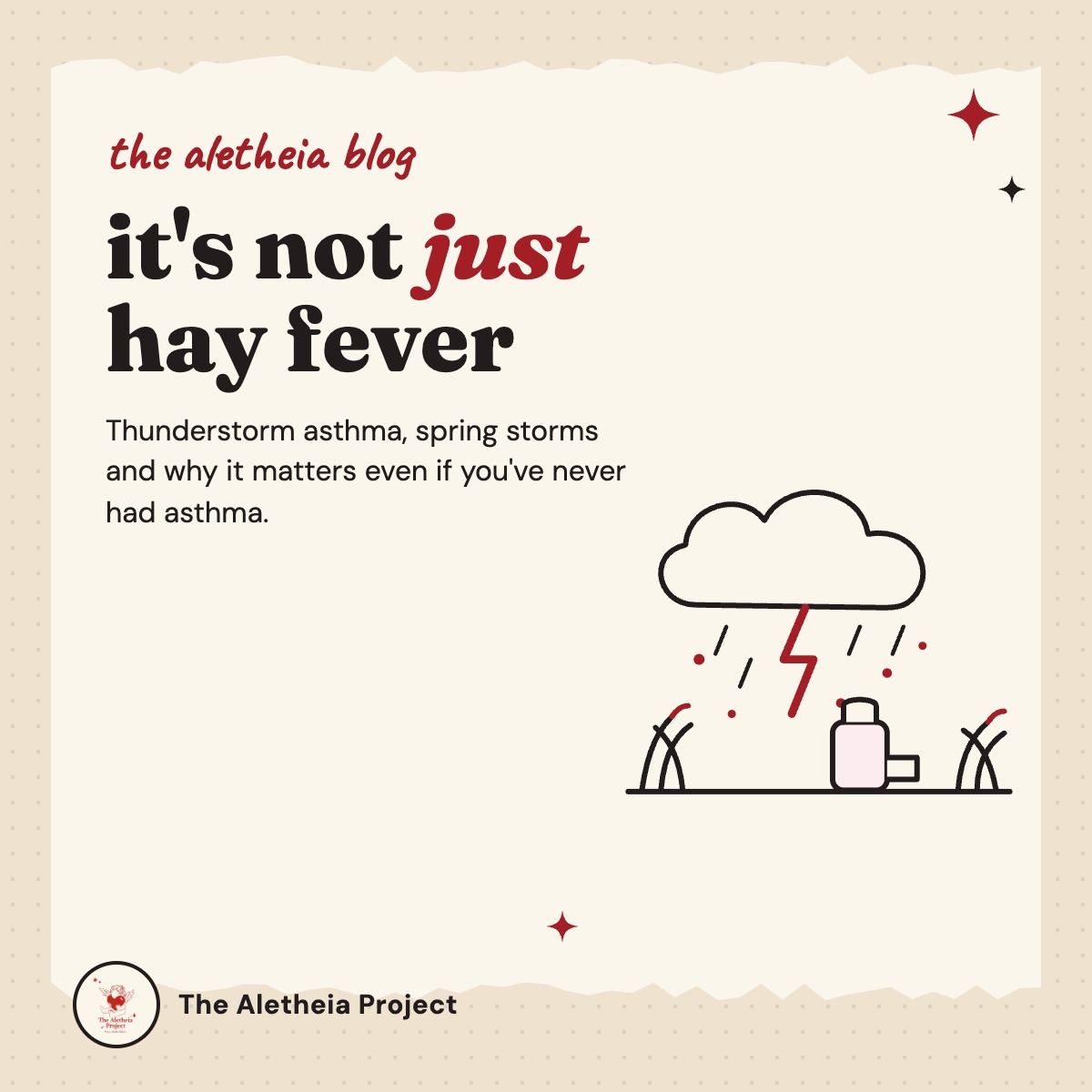
“it’s just hay fever”: thunderstorm asthma and why November matters
Every spring in Melbourne, the same thing happens. Eyes itch, noses run, someone in class gets through a whole box of tissues before lunch, and everyone shrugs: “it’s just hay fever.”
Most of the time, that’s true. But there’s one kind of spring weather where “just hay fever” can turn into a breathing emergency very quickly, and it can happen to people who have never been told they have asthma. It’s called thunderstorm asthma, and Victoria is right in the middle of its season.
So what actually is thunderstorm asthma?
It sounds made up. It isn’t.
When a storm rolls in on a day with lots of grass pollen in the air (ryegrass in particular), pollen grains get drawn up into the storm clouds. There they absorb water, swell and burst into tiny particles. The gusty winds that arrive just before the rain push those particles back down to ground level, where people breathe them in. Because they’re so small, they can get much deeper into your lungs than a whole pollen grain would.
For some people, that sets off asthma symptoms. When lots of people are affected over a short time, it’s called epidemic thunderstorm asthma.
Why November, and why Melbourne?
Victoria’s grass pollen season usually runs from 1 October to 31 December, and the state’s thunderstorm asthma forecasting runs across the same months. Spring and early summer is when the risk is highest.
On 21 November 2016, Melbourne had what the Victorian Department of Health calls the world’s largest epidemic thunderstorm asthma event. Thousands of people developed breathing difficulties in a very short time, and ambulance services and emergency departments were overwhelmed. One of the biggest lessons from that night, according to the National Asthma Council: many of the people affected had never been diagnosed with asthma, and people with springtime hay fever were among the most likely to be hit.
Who’s actually at risk?
This is the part most people don’t know. According to Better Health Channel, healthdirect and the National Asthma Council, you’re at higher risk if you:
- get hay fever in spring, even if you’ve never been told you have asthma
- have asthma now, or had it as a kid
- might have asthma that’s never been diagnosed (think wheezing, a cough that hangs around, or getting breathless more easily than your friends)
- have asthma that isn’t well controlled, or aren’t using your preventer as prescribed
Having both hay fever and asthma puts you at the highest risk. And it’s a common combo: healthdirect notes that around 4 in 5 people with asthma also have hay fever.
“Just hay fever” sounds harmless. The problem starts when that phrase stops us from taking our own symptoms seriously.
The trouble with “it’s just hay fever”
Hay fever gets brushed off constantly. It’s seasonal, it’s common, and it’s treated as an annoyance rather than a health condition. Lots of young people never talk to anyone about it; they just push through spring.
But hay fever is worth treating properly in its own right. healthdirect suggests talking to a doctor if your symptoms show up at least 4 days a week for at least 4 weeks, or if they’re affecting your sleep or daily life. Untreated hay fever can also make asthma harder to control.
The same goes for the “I’m just unfit” cough or wheeze. Better Health Channel says anyone who wheezes or gets breathless, even without an asthma diagnosis, should see a GP. That’s not being dramatic. That’s collecting information about your own body.
The signs to know
Asthma symptoms include shortness of breath, chest tightness, wheezing and a cough that won’t quit. During thunderstorm asthma, they can get worse very quickly.
The National Asthma Council describes an asthma emergency as symptoms getting worse very quickly, being so short of breath you can’t speak comfortably, lips looking blue, or getting little or no relief from a reliever puffer. If that’s happening, call 000 and say it’s an asthma emergency.
Blue/grey reliever puffers (salbutamol) can be bought from a pharmacy without a prescription. Better Health Channel notes that if you’re not sure whether someone’s breathing trouble is asthma, a blue/grey reliever is unlikely to cause harm. The National Asthma Council has free asthma first aid charts that show exactly what to do; it’s worth reading one before you ever need it.
What you can do
- Check the forecast on high pollen days. VicEmergency (website and app) shows thunderstorm asthma warnings in real time, and the Melbourne Pollen Count app tracks pollen levels. Turn on notifications for spring.
- When a storm’s coming, get inside. Especially in the windy stretch before the rain. Close windows and doors, and switch air conditioning off or set it to recirculate. healthdirect notes that face masks don’t protect against these tiny particles.
- Get your hay fever looked at. A pharmacist is a great first stop, no appointment needed. Steroid nasal sprays need to be used every day and can take a few days to start working, so ask them to show you how.
- If you have asthma, get a check-up now. Ask your GP for an asthma review and an up-to-date asthma action plan. If you’ve been prescribed a preventer, keep using it.
- Keep your reliever where you’ll actually have it. Bag, locker, sports kit. And tell your friends where it is.
- Look out for each other. If a friend says they “just can’t catch their breath” on a stormy spring evening, take it seriously.
For health advice that isn’t an emergency, you can call the healthdirect helpline on 1800 022 222. If you’re feeling worried or overwhelmed, Kids Helpline is there 24/7 on 1800 55 1800. In an emergency, always call 000.
Aletheia’s reminder
Your body gives you information all spring: the itchy eyes, the tight chest, the cough you keep ignoring. Paying attention isn’t overreacting. Knowing what thunderstorm asthma is, and who it can affect, is one small piece of health literacy that could matter a lot on the wrong November night.
This post is general information, not medical advice. If you’re unsure about your symptoms, talk to a GP or pharmacist.
In voice and solidarity,
The Aletheia Project
Sources
- Better Health Channel: Thunderstorm asthma
- healthdirect: Thunderstorm asthma
- healthdirect: Hay fever
- Victorian Department of Health: Epidemic thunderstorm asthma
- National Asthma Council Australia: Thunderstorm asthma
- National Asthma Council Australia: Asthma first aid
- Asthma Australia: Thunderstorm asthma